
Double-Coated Dog Deshedding in Mechanicsburg, PA: What Goldens, Huskies, and Aussies Actually Need
A working groomer's guide to double-coated dog deshedding in Mechanicsburg, PA. The five-step process, breed-by-breed van setup, and why you should never shave the coat in summer.
TL;DR. Double-coated breeds (huskies, goldens, aussies, shepherds, bernese, samoyeds) need a real de-shed treatment, not a haircut. Plan on 75 to 110 minutes for a deshed visit, and twice-yearly seasonal blow-outs (spring and fall) on top of regular grooming. Never shave a double coat, it does not cool the dog and it permanently damages the texture.
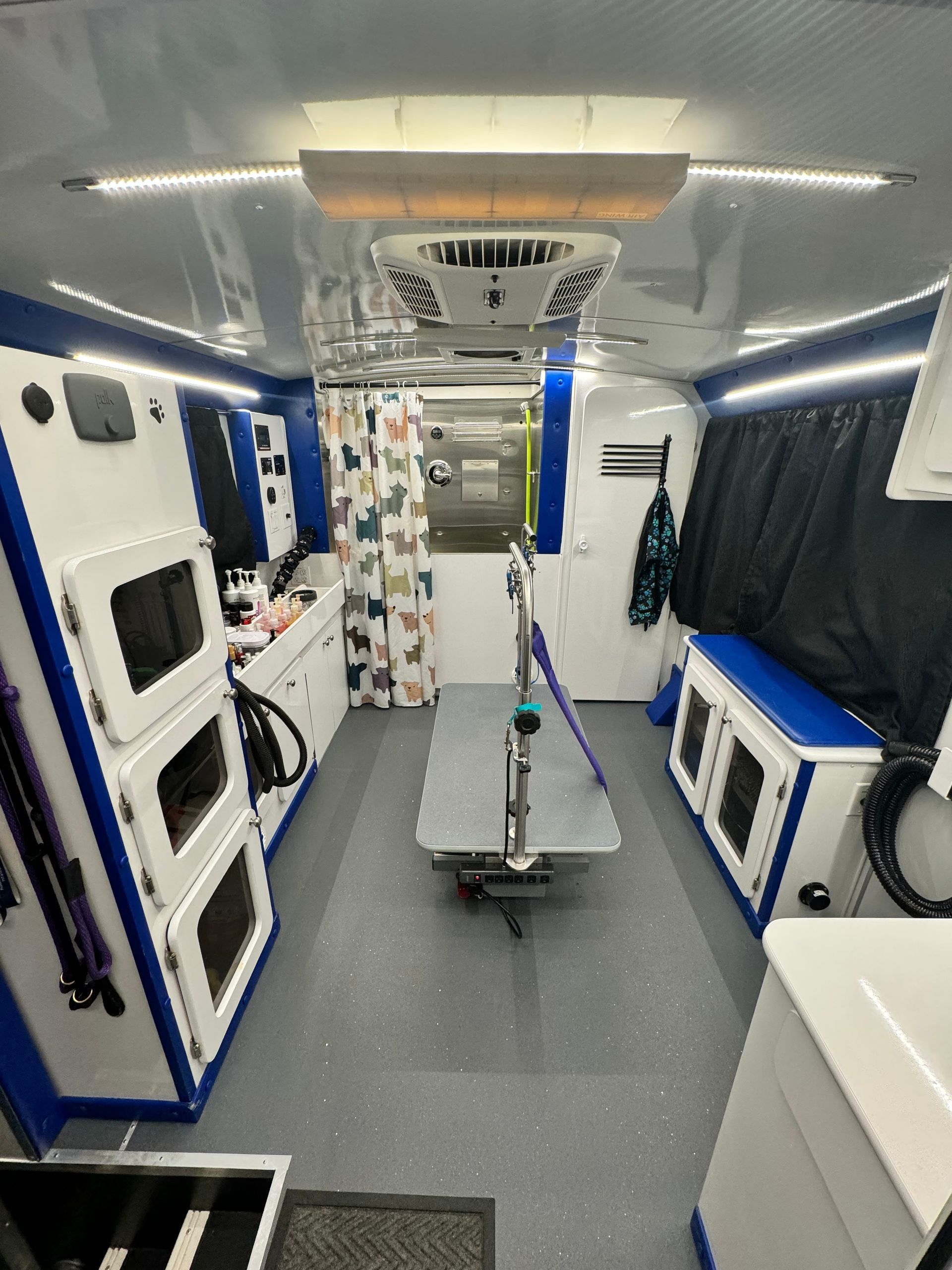
Bernese mountain dog named Otis came on the van last April. 90 pounds. Owner asked for "a summer cut, just shave him down." I said no. We talked about it in the driveway for ten minutes, sitting on the back step of the van, and then we did a real de-shed instead. Three weeks later she texted me a photo. Otis was sleeping on the cool kitchen tile, undercoat fluffy and intact, and she said he wasn't panting at all. Welcome to the case for
double-coated dog deshedding in Mechanicsburg, PA, and the case against the summer shave.
What Counts as a Double Coat (and Why It Matters)
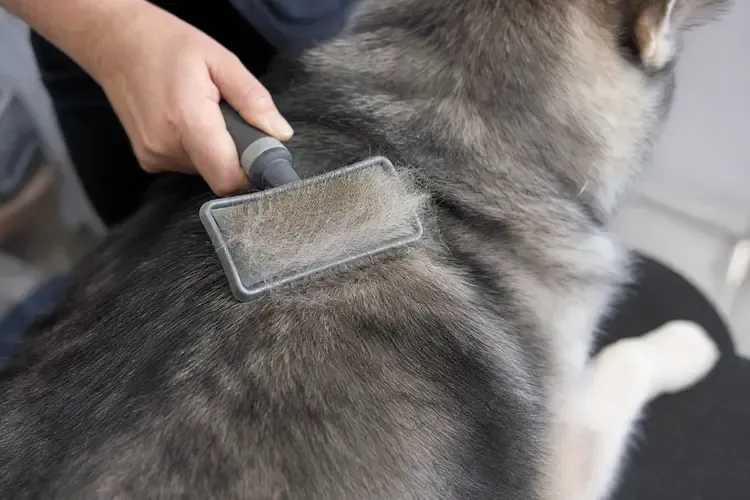
Double-coated breeds have two layers. A soft, dense undercoat that insulates against heat AND cold, and a coarser topcoat (the guard hairs) that repels water, dirt, and sun. The undercoat sheds twice a year in big seasonal blowouts. The topcoat doesn't shed much at all. When you shave a double coat, the undercoat grows back faster than the topcoat, the texture goes patchy, and the insulation never sets right again.
Most owners think the coat traps heat. The opposite is true. The undercoat is what's trapping cool air against the skin, the same way insulation in a cooler keeps the inside cold, not warm. Pulling out the dead undercoat (which is what a deshed does) is the right move. Shaving the topcoat is the wrong one. There's a real reason every professional grooming education includes a hard rule about this. Most groomers will say yes to a shave anyway because the conversation is easier than the no. I won't.
What a Real Deshed Visit Looks Like in the Van
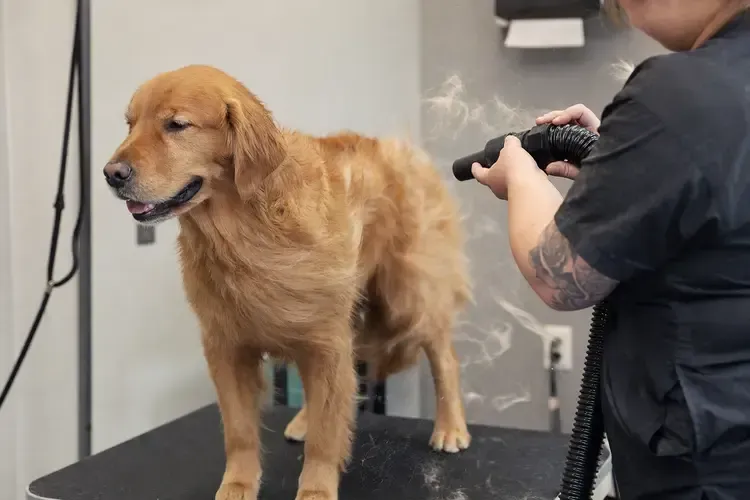
A real de-shed isn't a brushing session. It's a five-step process and most of the time is the dryer, not the brush. We bath, we condition, we high-velocity dry to blow the undercoat out, we slicker-brush what the dryer didn't finish, then we comb-through to make sure no felted spots got missed. Skip any step and you're either leaving undercoat behind (next week's shed) or scissoring blind through wet mats.
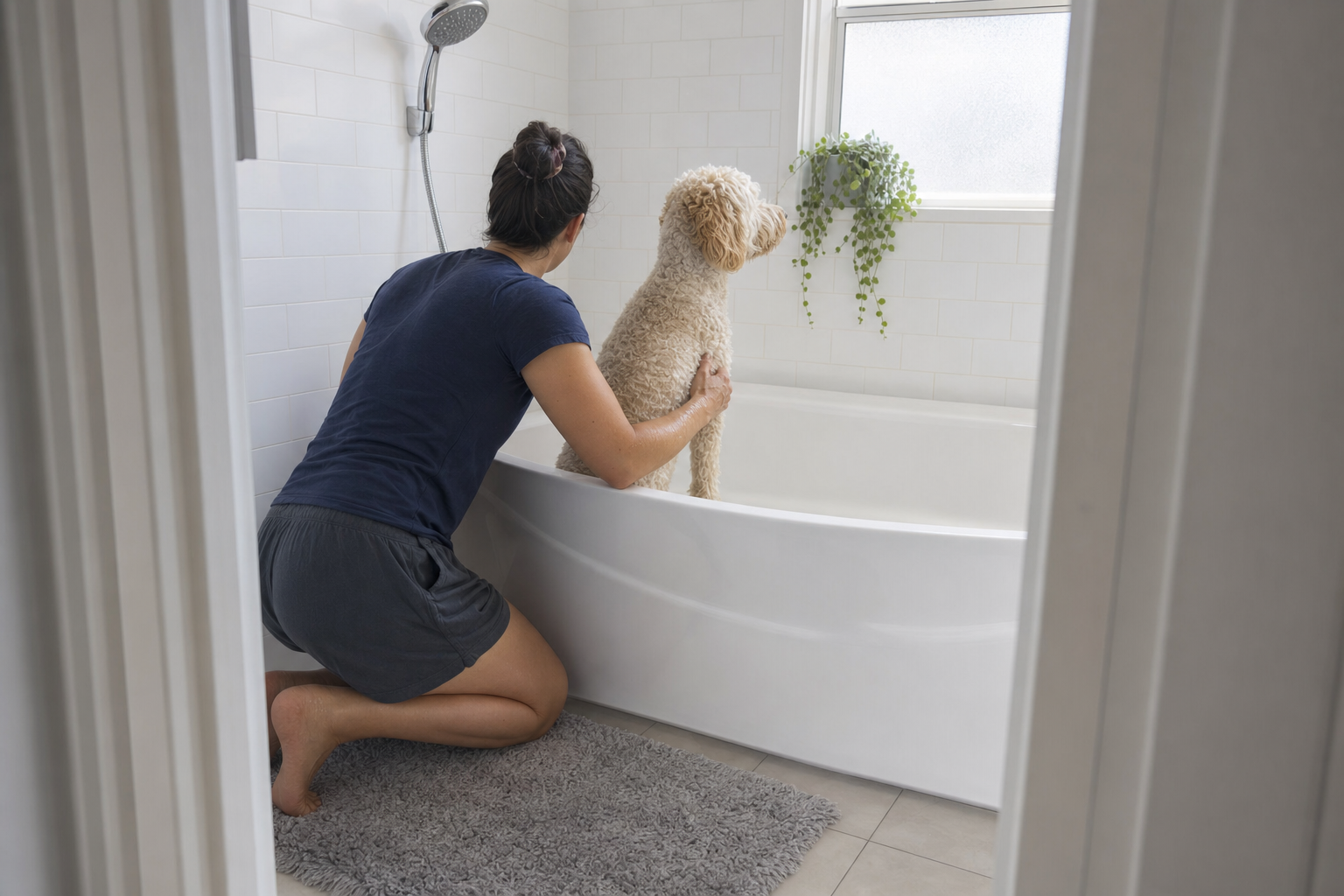
- Bath with a deshed shampoo that swells the hair shaft so undercoat releases. 8 to 12 minutes.
- Conditioner to ease the brush-out. 4 to 6 minutes.
- High-velocity dry to physically blow the undercoat out. This is the actual deshed work. 18 to 30 minutes.
- Slicker brush to catch what the dryer didn't. 8 to 15 minutes.
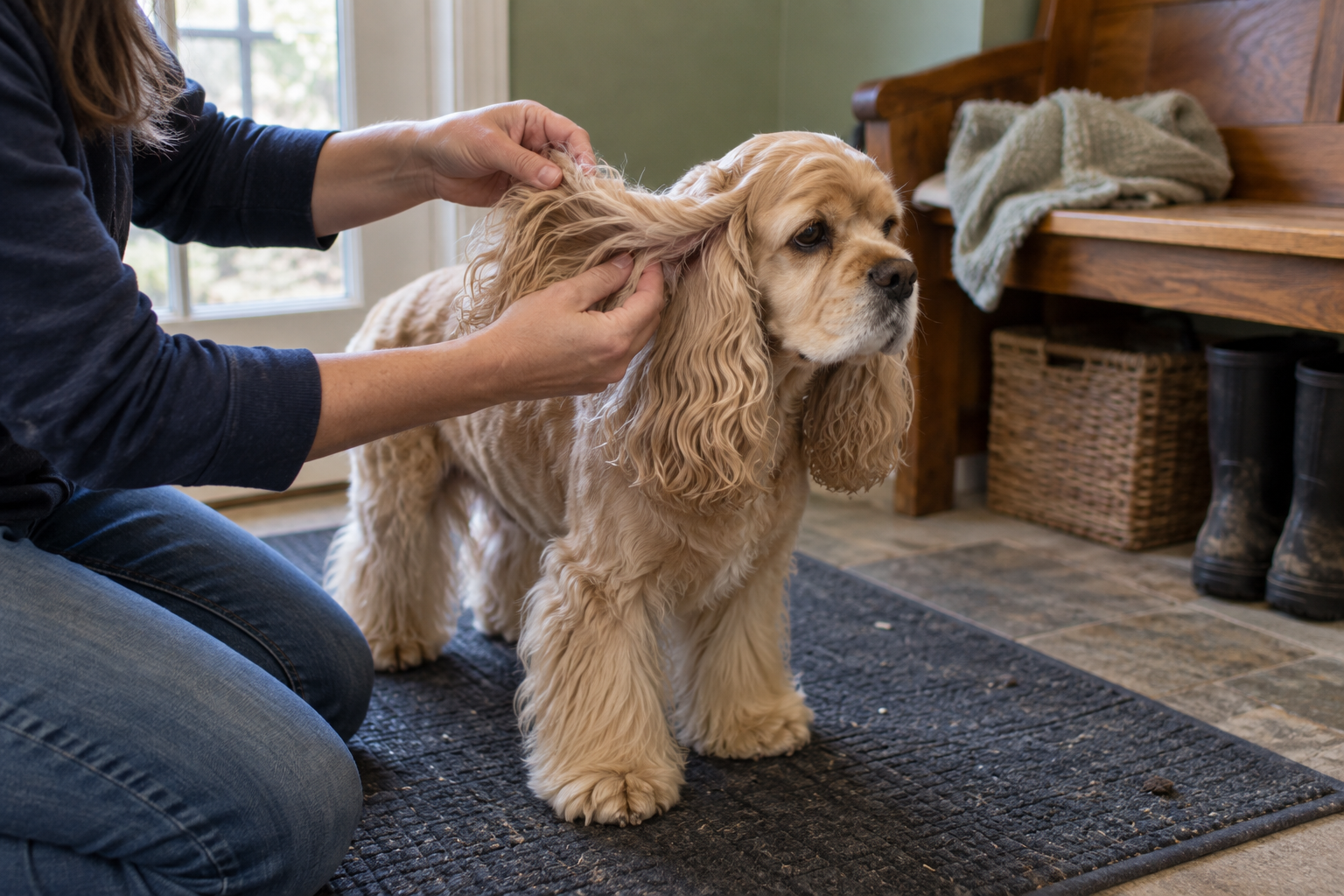
- Final comb-through to check for felted spots, especially behind ears and on the rear pants. 4 to 8 minutes.
Why Aussie, Goldie, and Bernese Each Need a Slightly Different Visit
Three double-coated breeds, three different van setups. An aussie at 45 pounds has a medium-density undercoat that releases cleanly with one good high-velocity dry pass. The whole visit slides into the standard slot. A golden at 70 pounds carries about 30% more undercoat by mass, and the dryer time roughly doubles, especially during spring shed. We pre-stage a second blade and a thicker brush for the rear pants where goldens hold the most loose hair.
A bernese or samoyed at 90-plus pounds is a different conversation. The undercoat is dense enough that a regular dryer won't blow it all out in one pass, so we go in sections. Front shoulders, then chest, then sides, then rear pants, with a comb-check between each. The visit lands closer to two hours, not because the dog is harder, but because the coat math is. If you've got a heavy-coated giant and the groomer wants to rush the dryer step, find a different van. That step is the visit.
| Breed/size | Coat condition | Time in driveway | What's included |
|---|---|---|---|
| Aussie, sheltie, small husky | Healthy seasonal shed | 60 to 75 min | Bath, deshed, brush-out, nails, ears |
| Golden, lab, medium husky | Healthy seasonal shed | 75 to 95 min | Same as above plus extra dry time |
| Bernese, samoyed, malamute | Healthy seasonal shed | 95 to 115 min | Same as above plus extra dry time |
| Any double coat | Heavy mid-coat tangling | Add 15 to 25 min | Spot demat plus deshed |
| Any double coat | Sanitary trim plus deshed | Add 10 to 15 min | Sanitary tidy plus deshed |
Approximate Mechanicsburg time blocks by breed. Spring and fall blow-out season runs longer because of the extra dry time.
How Often to Book Through the Year
My honest schedule for double coats. Monthly bath and brush keeps coat density manageable. Two heavy de-shed treatments per year, one in late spring as the winter coat blows, one in late fall as the summer coat blows. Any time the owner says "I'm seeing tumbleweeds in the kitchen," we move the next deshed up by two weeks. The math is simple. Twenty minutes more in the van saves you forty minutes of vacuuming a day.
Mechanicsburg has a lot of golden retrievers and aussies, which are the two breeds most owners under-prepare for. A goldie's spring shed will fill a gallon bag with undercoat in one visit. Not exaggerating. If you're newish to the breed, the first deshed is a small shock. After that you settle into the rhythm.
When a Hydro Massage Belongs in the Visit
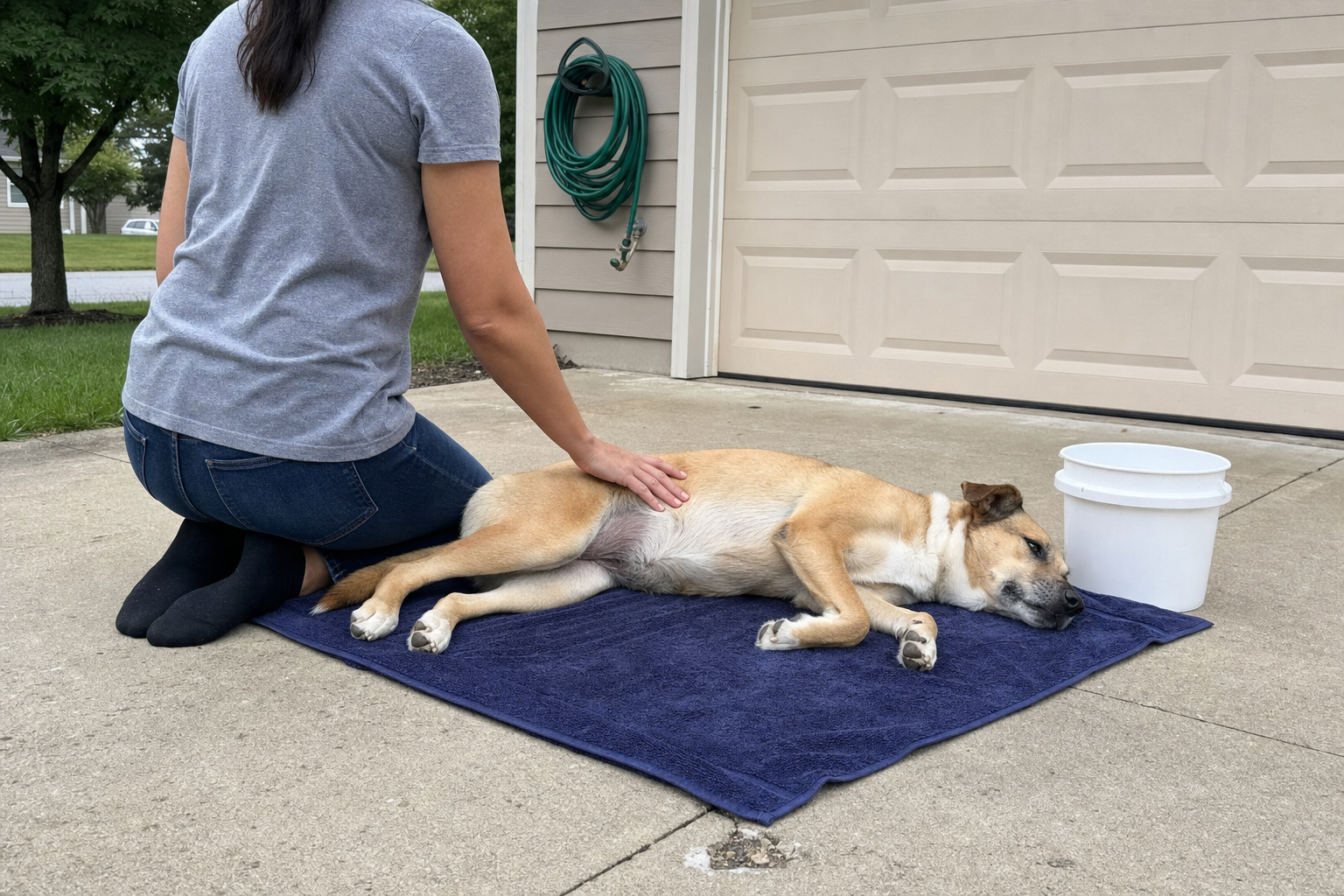
For dogs with sensitive skin, dry-flake conditions, or hot-spot histories, a hydro massage added to the deshed turns the bath into a circulation-and-skin-health treatment. It's not a luxury upgrade. It's a real medical-adjacent help for senior dogs and dogs with seasonal allergies, and it's especially useful on double coats because the warm pulsing water reaches dead undercoat that a regular bath misses.
I add it twice a year for any senior double-coat, usually paired with the spring and fall deshed. The benefit shows up as fewer hot spots through summer and a calmer dog at the next visit. The other moment to add it is when an owner mentions the dog has been licking a paw or scratching the same spot for days. That's often a circulation or skin-dryness signal, and a hydro massage at the next groom will tell us whether it's a grooming fix or a vet question.
What to Do Between Visits
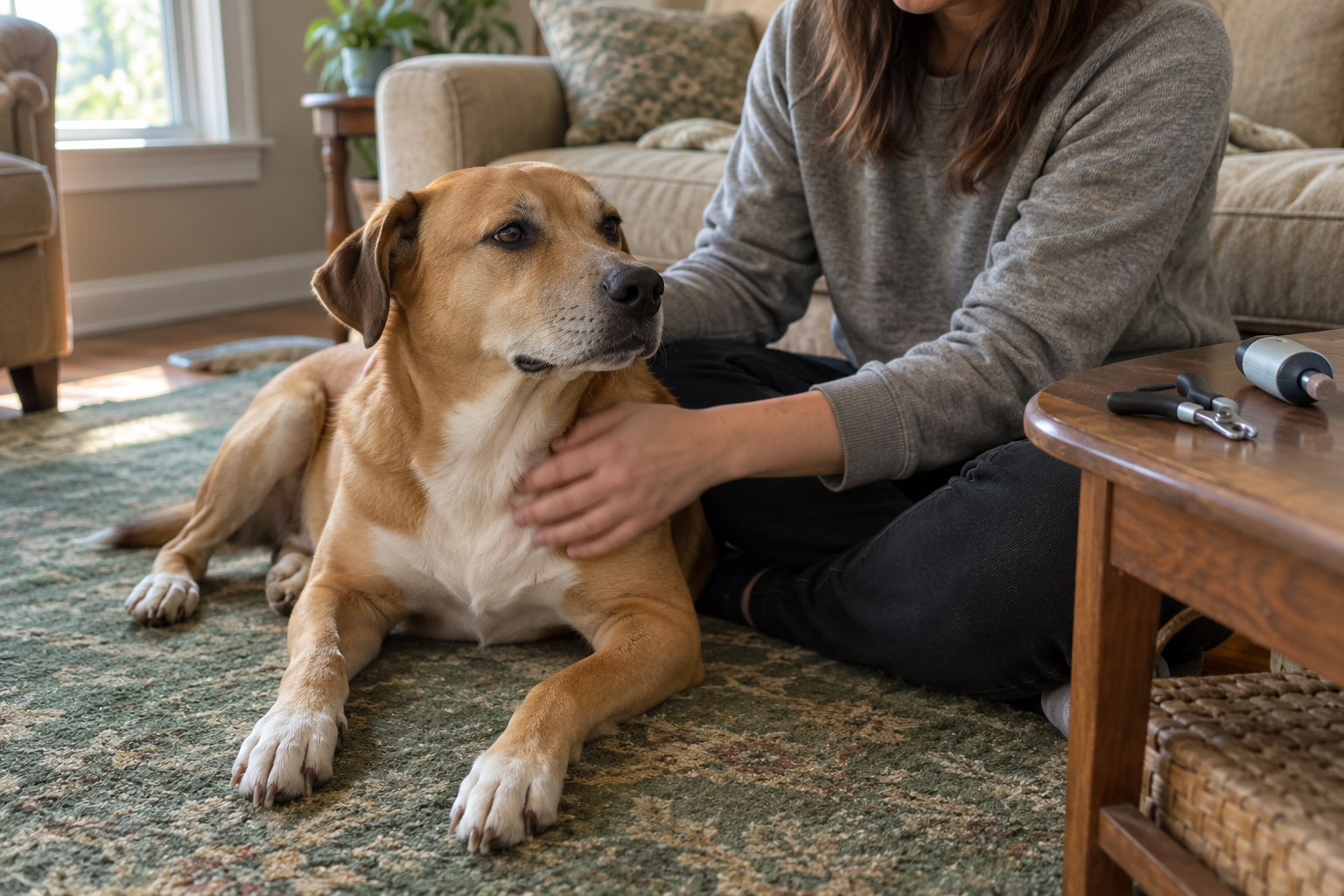
Three habits keep a double coat manageable between deshed visits. They're boring. They work. And the owners who do them keep the coat in better shape so the dog needs less work each time we see it.
- Twice-weekly slicker brush. Five to ten minutes. Topcoat first, undercoat second.
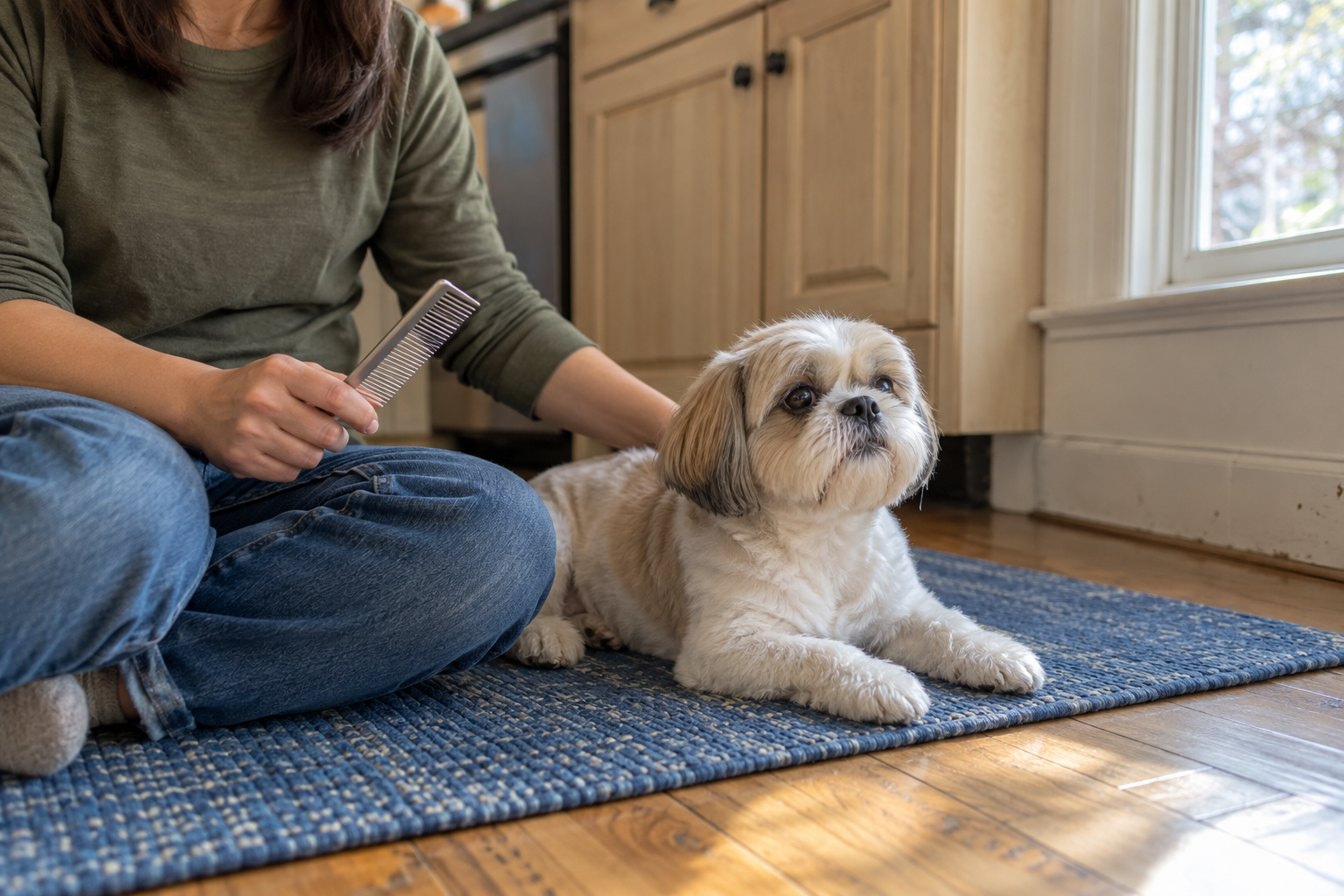
- Weekly comb-through. A long-pin metal comb. Catches mats before they form.
- Bath only when needed. Over-bathing strips the natural oils that keep the topcoat water-resistant. Once every 4 to 6 weeks unless something's actually dirty.
- No shaving in summer. Trust the coat. It's working harder than you think.
And one note specifically for Mechanicsburg owners. Our climate has a pollen-heavy spring and a dry fall, both of which mean dogs are coming in for ear cleans and skin checks more than the average. Add 5 minutes to your at-home routine for an ear and paw-pad check during shed seasons. That's where hot spots start, hidden under the undercoat. Catch them at home or we'll catch them in the van. Either way you don't want to find out about them six weeks later when the dog is uncomfortable.
Honest takeaway. Double-coated dogs don't need haircuts. They need a real deshed twice a year, a regular bath schedule, and an owner who's willing to brush at home. Skip those and the coat fights back. Stick with them and your dog stays cooler in summer, warmer in winter, and a lot easier to live with year-round.