Cavalier King Charles Spaniel Grooming Without Losing the Feathering
A Cavalier can look beautifully cared for without losing the soft feathering around the ears, legs and tail. Good Cavalier King Charles Spaniel grooming is usually about keeping those features neat, not giving the whole dog one short length. Tell the groomer what you want to keep before discussing what to remove.
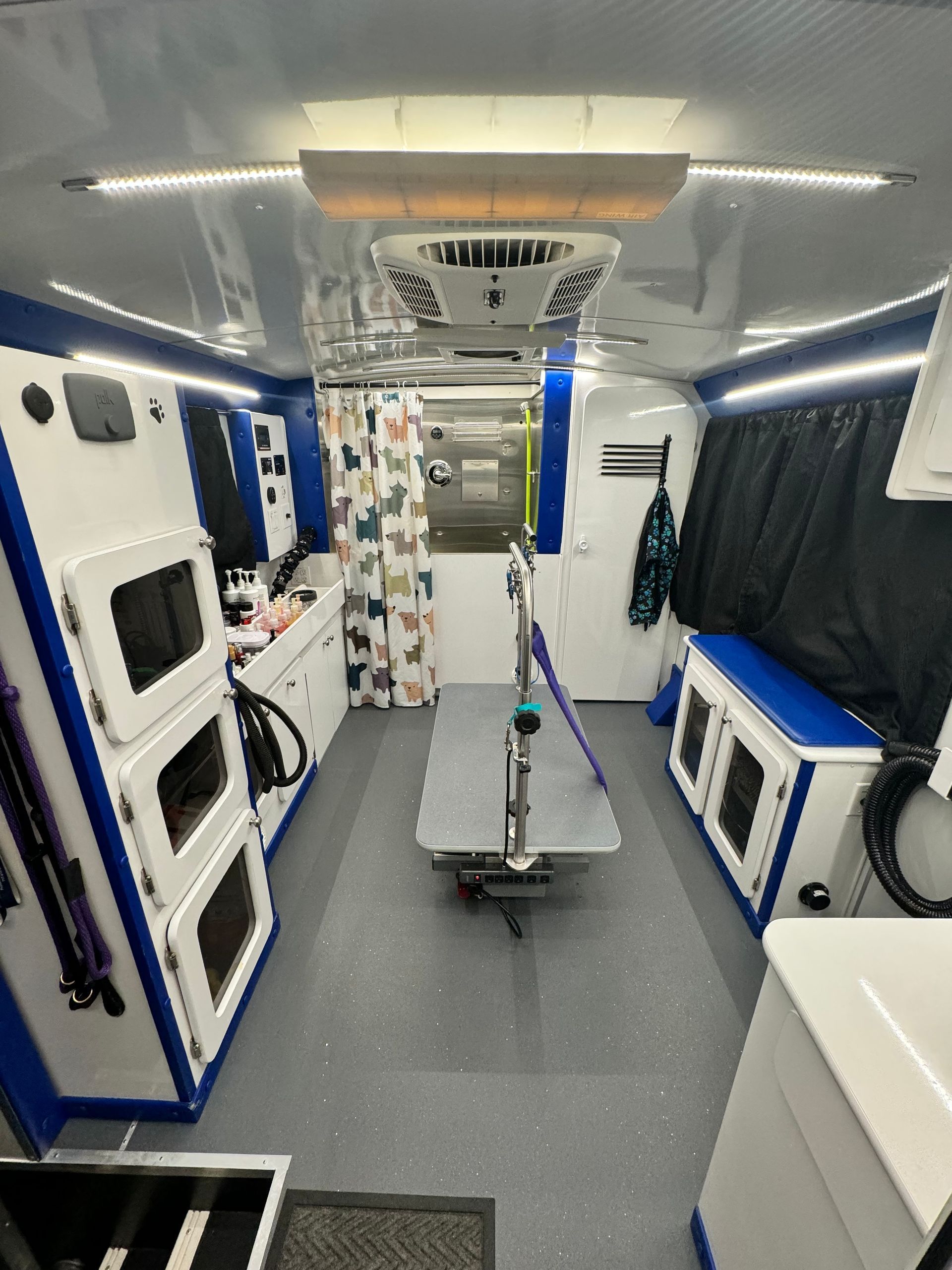
For Carlisle and Cumberland County owners, Happy Hounds' Mobile Pet Grooming Full Groom Package is a starting point for that conversation. Bring a current photo of your Cavalier and explain which areas are easy to maintain, which collect debris and which have become difficult to brush.
Know which feathering you want to preserve
The American Kennel Club's Cavalier grooming guide describes the breed's silky coat and feathering around the ears, chest, legs, tail and underside. Those details are a large part of the familiar Cavalier outline.
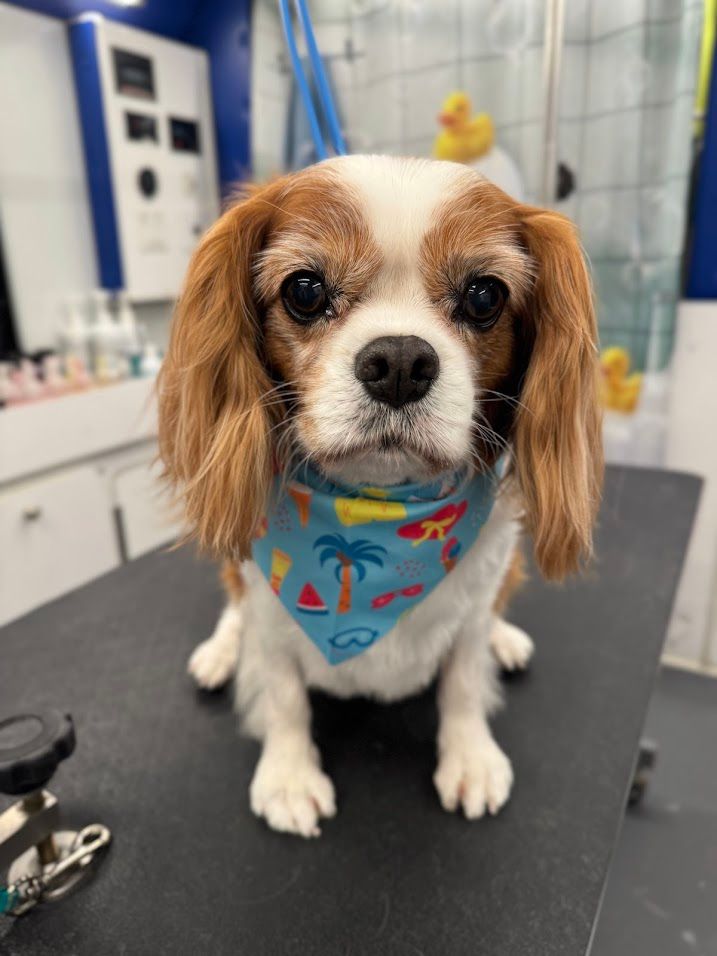
A photograph of your own dog helps because it shows where that fullness currently sits. If you love the ears, the tail or the feet, say so. “Please keep the feathering” means much more when the groomer knows exactly which parts you mean.
Keeping the outline doesn’t mean turning down every tidy, and choosing an easy-care finish doesn’t mean agreeing to a close cut everywhere. Treat each area as its own decision rather than one instruction for the whole dog.
Caring for Cavalier Ears and Feathering
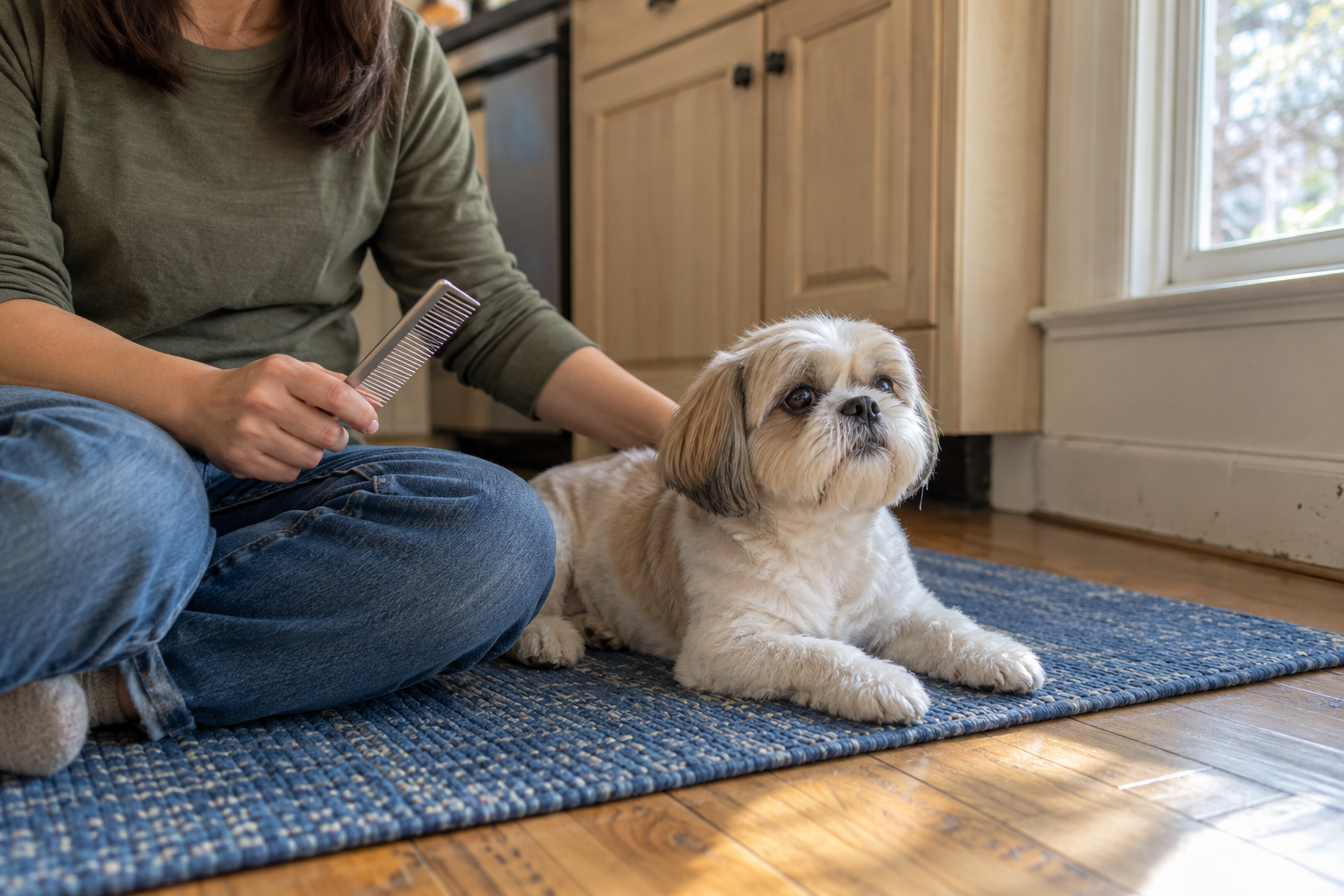
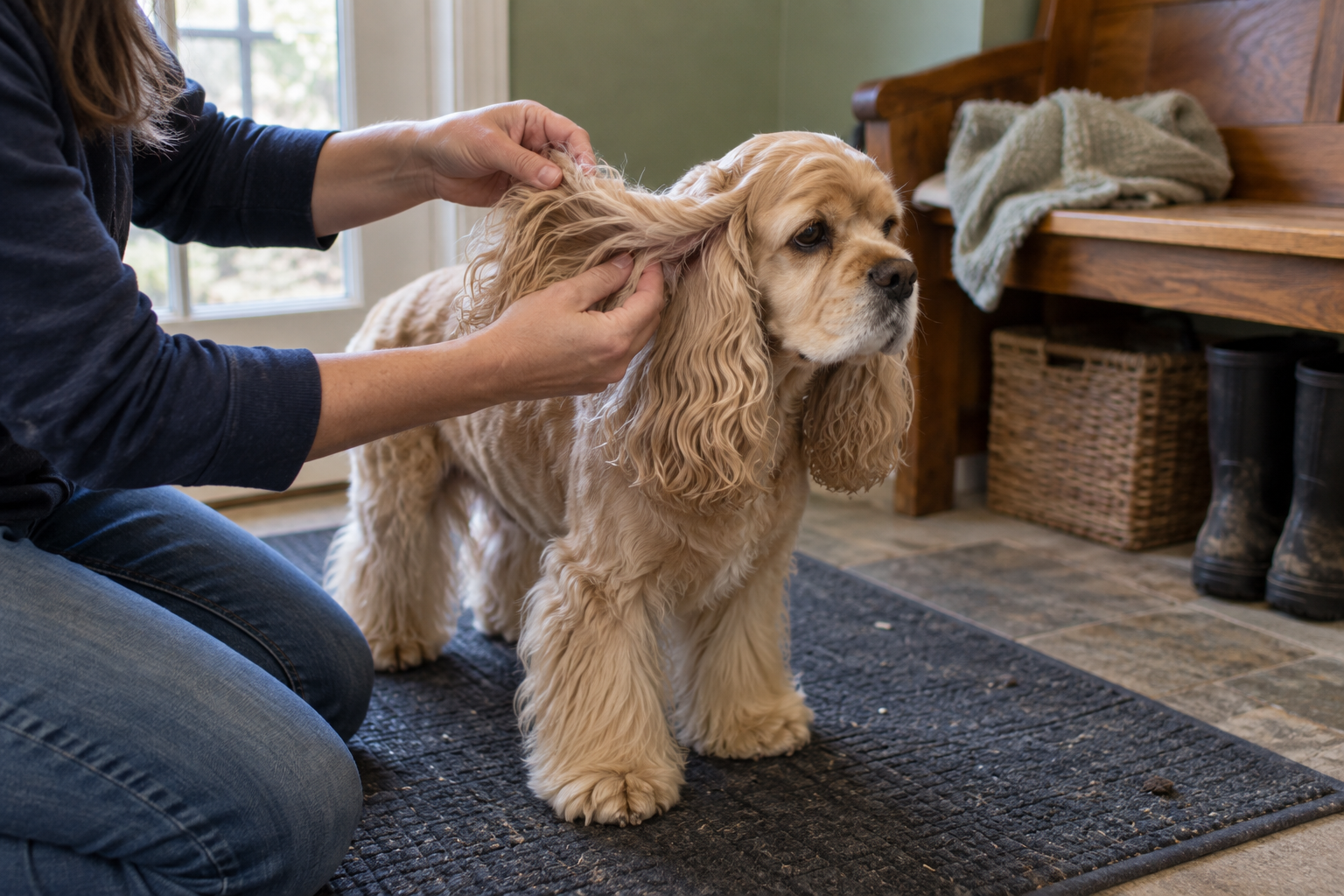
Long ear feathering frames the face, but it’s also hair that many owners find difficult to maintain. Ask the groomer to show you how to work through the outer feathering comfortably and how to spot a tangle that needs professional attention.
Ear health is a different matter. The AKC points out that a Cavalier’s heavy drop ears limit airflow, which is why it recommends checking them daily. If you notice a new odor, discharge, redness or discomfort, contact the veterinarian. Do not assume shortening the surrounding hair or routine cleaning will establish the cause. Share any vet instructions with the groomer before the visit.
Avoid pulling repeatedly at a knot because you want to keep all the length. Explain where the coat catches and ask what can be retained comfortably. A good-looking finish isn’t worth a stressful session.
Compare the everyday choices
The most useful style discussion connects appearance with life at home. Does the chest hair collect food? Do the feet bring in debris? Is the tail easy to maintain while the ear feathering is not? A specific request gives the groomer far more to work with than “make it easier.”
- Ears: discuss the length you like and the upkeep you can manage.
- Chest and underside: explain where hair becomes dirty or tangled during ordinary activities.
- Leg feathering: ask what tidying would preserve the outline while simplifying care.
- Feet: discuss practical grooming while making clear how much of the characteristic feathered appearance you want retained.
- Tail: identify whether you prefer the current fullness or want to discuss a subtle tidy.
These are preferences, not guarantees. The final plan depends on the coat’s condition and your dog’s comfort on the day.
Brush the spots a portrait never shows
A front-facing photo emphasizes the face and ears. It does not show the chest, the backs of the legs or the underbelly, which are exactly the places that tend to be overlooked. Ask the groomer to demonstrate care for those areas on your dog’s own coat.
Be honest if your dog dislikes being handled somewhere. That affects the routine you can realistically keep up, and it may be worth raising with the groomer. A long list of instructions is not useful if you cannot perform them without a struggle.
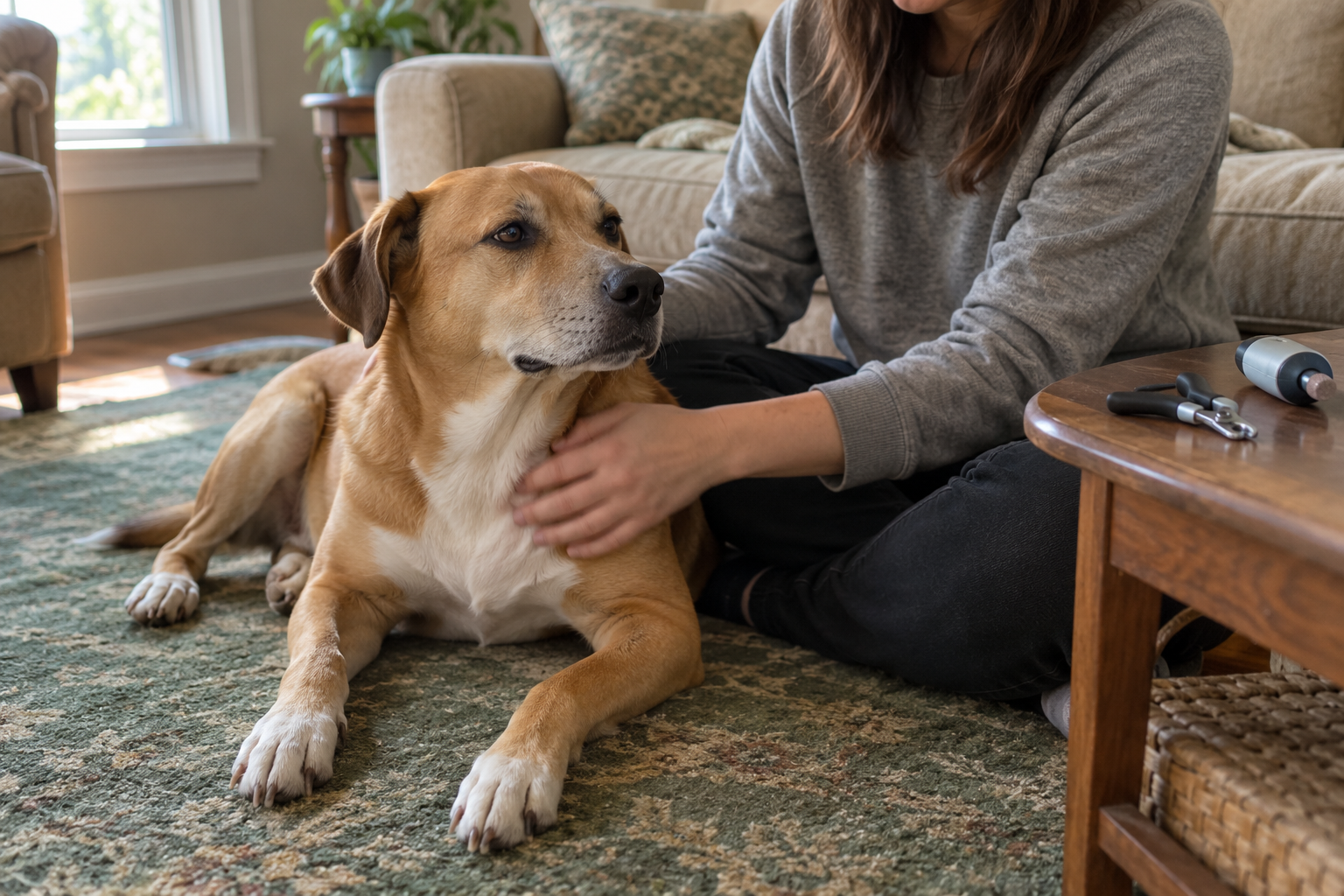
You do not need to complete every part of home grooming in one session. Follow the individual guidance you receive, stop if your dog is uncomfortable and ask for help with resistant tangles. Do not use household scissors close to the skin to rescue a particular look.
Choose reference photos with care
Look for a natural photo that shows the whole dog from the side. Heavy editing and carefully arranged hair can make a style look easier to maintain than it is. If you only like the ears in a picture, say that instead of presenting the whole image as your request.
Bringing two photos can help: one showing the outline you enjoy and one of your own dog today. The groomer can discuss the difference and explain what is realistic. A reference supports a conversation; it does not guarantee a duplicate result.
Also ask what will happen if the coat assessment changes the original plan. Decide which changes should require a call before work continues. Clear expectations are especially useful when maintaining the feathering is your main reason for choosing a particular finish.
Make the mobile appointment run smoothly
Confirm the mobile grooming appointment with Happy Hounds Mobile Pet Grooming and discuss parking or access requirements. If your Cavalier needs particular handling because of a current health issue, share the veterinarian's instructions during booking rather than only at the door.
Have the person who understands the grooming request available for the handoff. Explain any differences between the reference photo and the result you actually want. A simple note about the ears, feet and body can prevent the request from becoming vague when another family member takes over.
Afterward, ask which areas need attention before the next visit. Take a photo if you like the finish and note any part that proves difficult to maintain. That record makes the next grooming discussion more specific.
Cavalier grooming works best when the natural look and everyday care are considered together. Keep the feathering deliberate, tidy thoughtfully and ask for help before a small maintenance difficulty becomes an uncomfortable tangle.
Keep the features you love. When arranging Happy Hounds grooming, share a Cavalier reference and name the feathering you want preserved. Ask how the proposed finish will balance that look with comfortable maintenance. Discuss your dog’s grooming needs.