
Hot Spots After Grooming: How to Treat One and Stop It
Quick version: trim the hair off the patch, clean it with cool water, dry it fully, and stop your dog licking it. Then find what caused it. If it is spreading after a day, smells, or your dog is unwell, call your vet.
Most of the dogs I work with are seniors or dogs that find grooming hard, and hot spots come up with both groups a lot. A hot spot is a patch of raw, wet, angry skin that shows up fast, sometimes overnight. Hot spots after grooming are the version owners ask me about most, because the timing makes it look like the groom caused it, and the answer is usually about how wet the coat stayed rather than the groom itself.
Treating one comes down to three things: getting the hair off it, keeping it dry, and stopping your dog getting at it while it heals. I am a groomer and not a vet, so I will be clear about which parts of this you can handle at home and which parts need an appointment.
What a hot spot looks like
It starts as a small wet patch and gets bigger quickly. The skin is red, the hair around it is damp and stuck down, and there is often some clear or yellow ooze. It feels warm and it is sore, so go gently when you look.
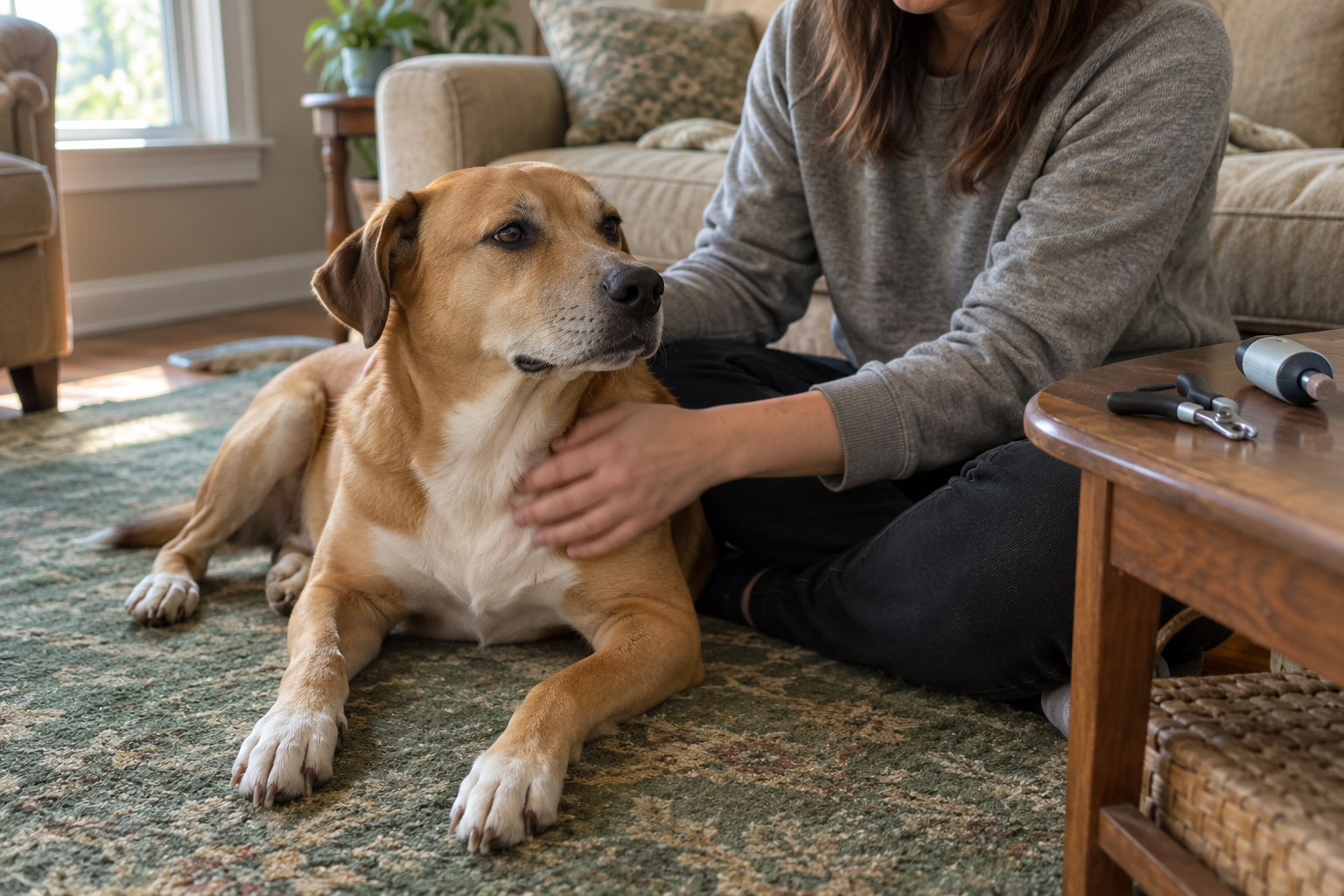
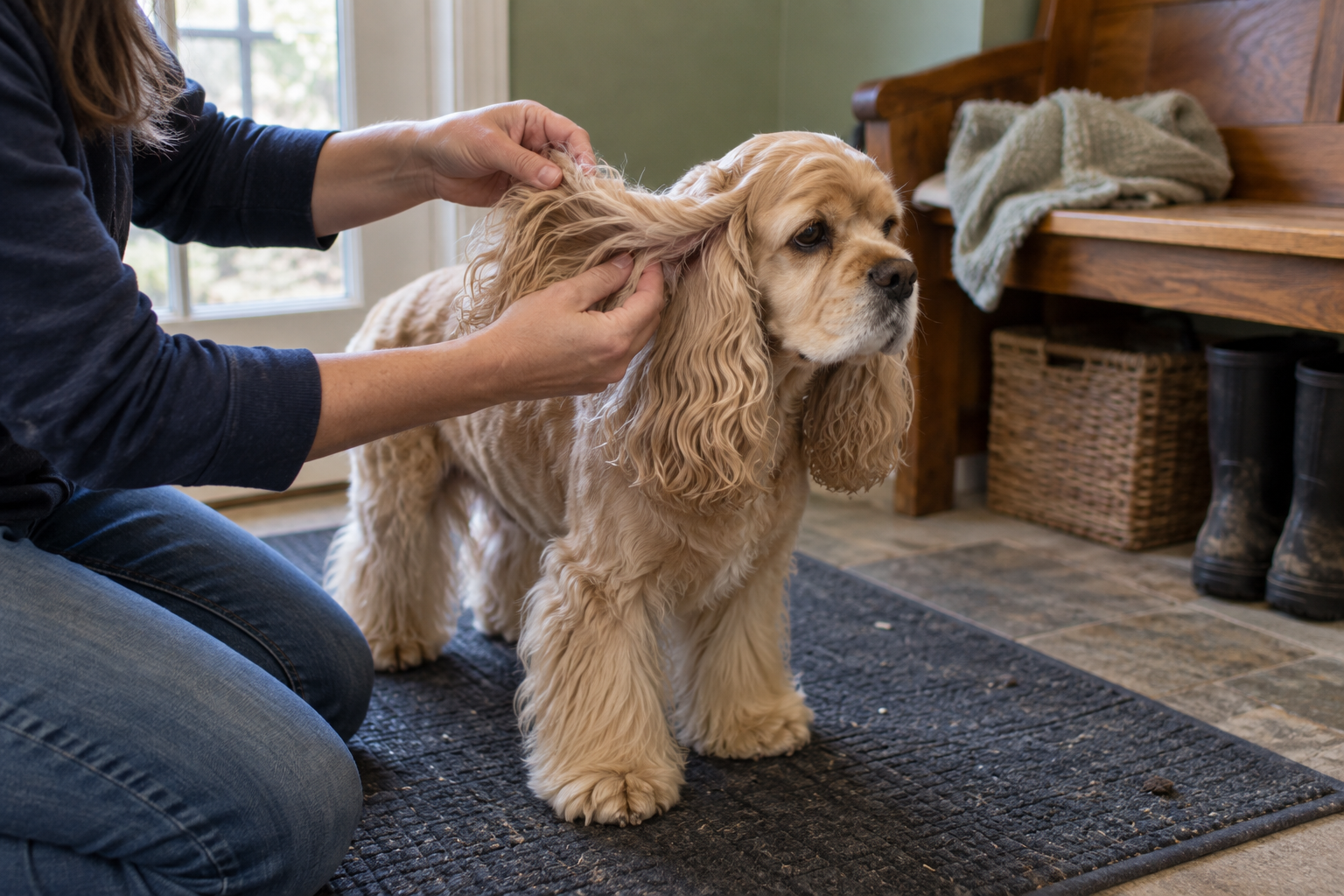
The usual places are behind the ears, on the cheek, along the neck under the collar, on the hip, and at the base of the tail. If your dog suddenly will not stop licking or chewing one spot, part the coat there and take a look.
They spread because of the licking. The skin itches, the dog licks, the licking keeps the skin wet, and wet skin gets worse. So the job is to stop the licking and let the skin dry out.
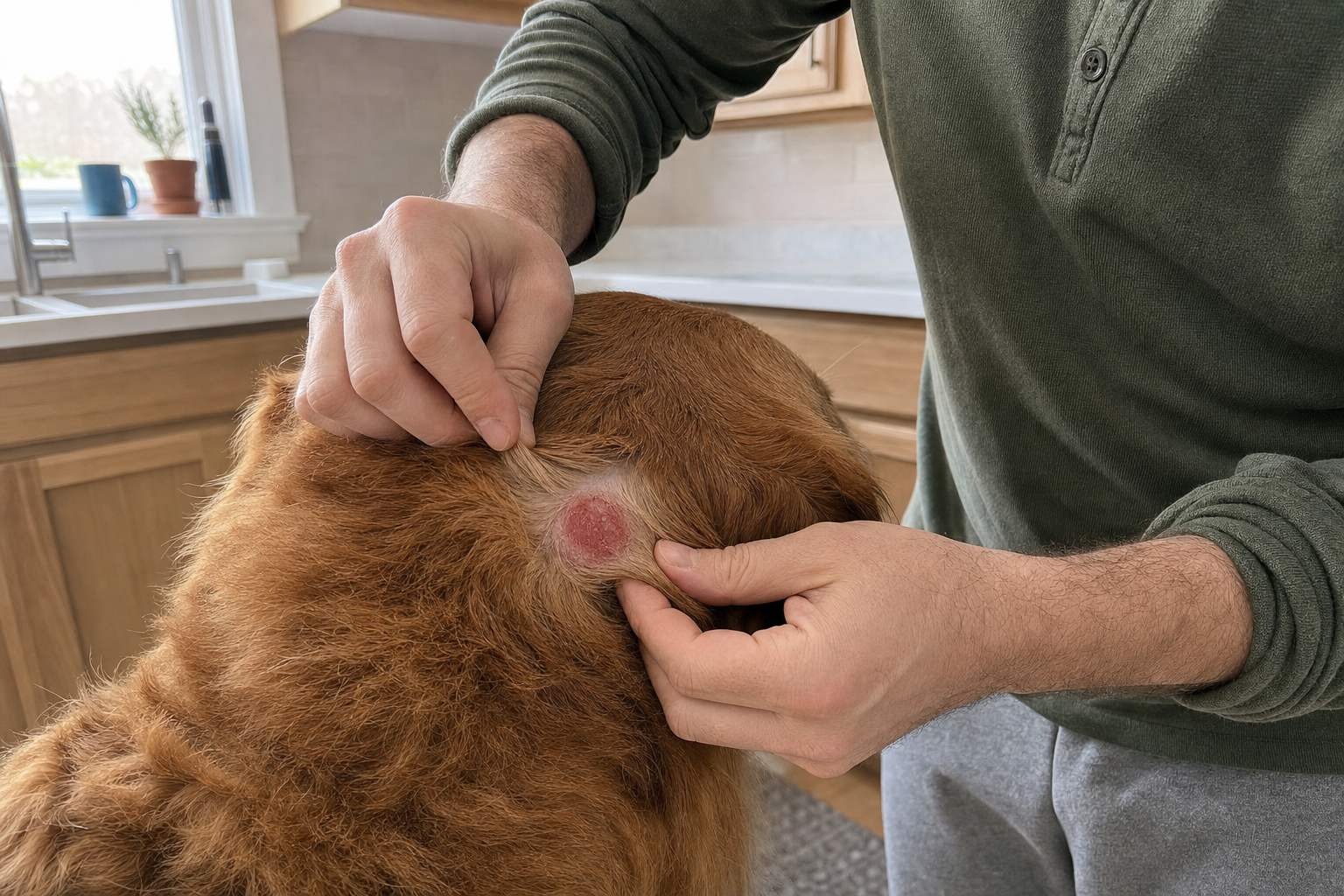
Check for fleas and other triggers first
A hot spot is a reaction to something, so something set it off. Spending five minutes finding that is worth it, because if you treat the patch and leave the cause alone you will be doing this again in a couple of weeks.
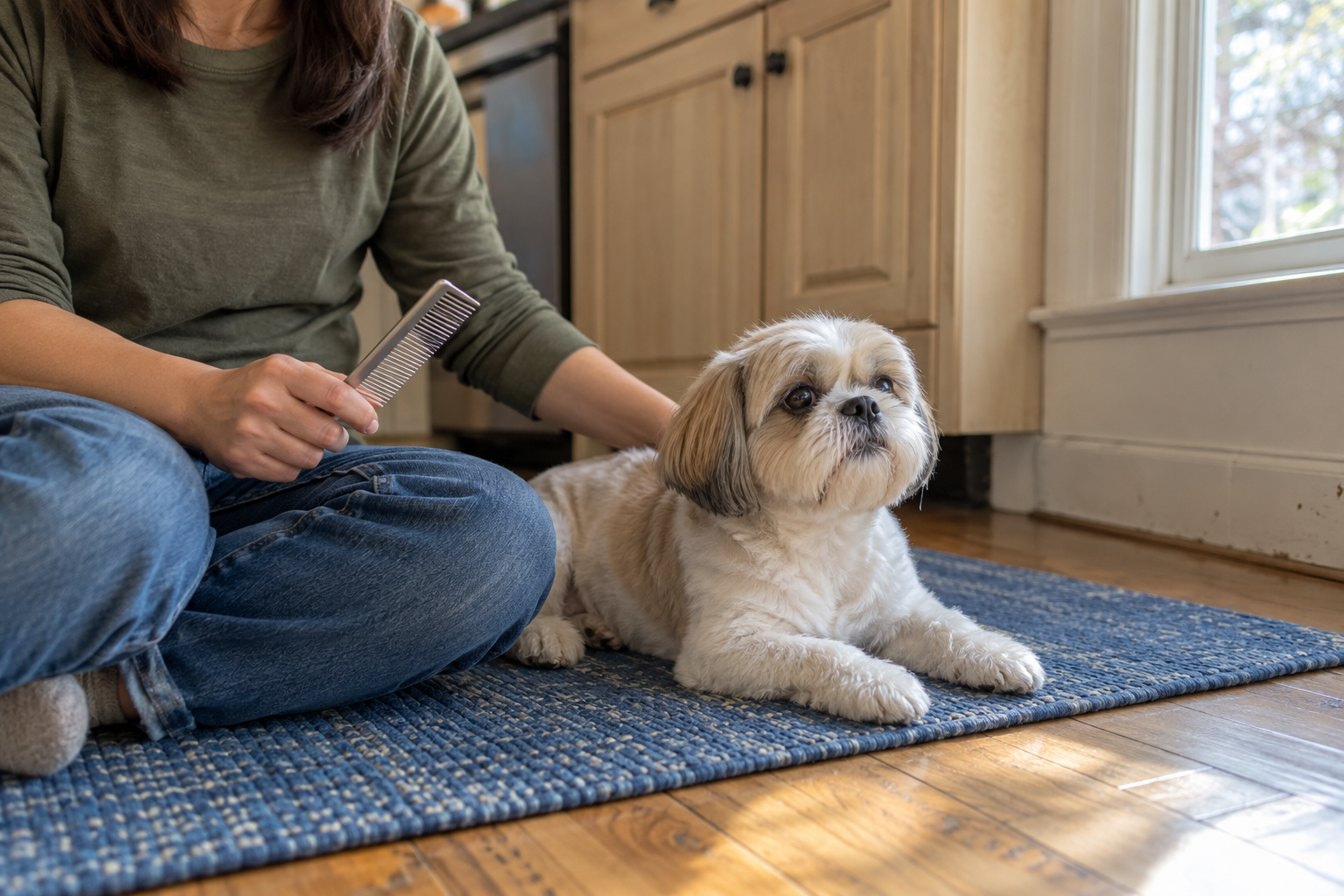
Fleas are the most common trigger I see, especially in late summer. Run a fine comb along your dog's lower back over a light colored towel and look for black specks. Press a damp white paper towel on them. If they smear red, that is flea dirt, and your dog has fleas.
The bath we book for fleas on dogs clears the coat and the flea dirt out, which helps a lot with the itching. The flea treatment itself has to come from your vet.
| What started it | What you tend to see | What usually helps |
|---|---|---|
| Fleas | Black specks at the tail base, chewing along the back | Vet flea treatment for every pet in the house |
| A coat that stayed wet | Hot spot a day or two after swimming, a bath or heavy rain | Drying the coat all the way down to the skin |
| Trapped dead undercoat | Thick packed coat a comb will not go through | A de-shed or a full groom to clear it out |
| Ear trouble | Head shaking, scratching one ear, hot spot on the cheek | Vet check for an ear infection |
| Seasonal allergies | Itching that comes back the same time every year | Vet visit to work out the trigger |
| Something sore underneath | Licking one spot over a joint or a hip | Vet check, because the skin may not be the real problem |

What to do in the first day
- Trim the hair off the patch and about half an inch around it so air can reach the skin. Use blunt nosed scissors or clippers and go slowly.
- Clean it with cool water or a saline rinse and pat it dry with a clean cloth. Do not scrub it.
- Let it dry all the way. Skin heals faster when it can dry out.
- Stop the licking with a soft recovery collar. Telling your dog off will not work, because the dog is not doing it to be difficult.
- Look at it twice a day and make a note of whether it is smaller or bigger than it was.
Leave human creams alone unless your vet has told you to use one. Plenty of them are not safe for a dog to swallow, and your dog will lick whatever you put on.

When it needs a vet and not a home remedy
Some hot spots settle down in a few days with nothing more than trimming, cleaning and drying. Others do not, and those need medication. There is no home version of an antibiotic.
Call your vet if the patch is bigger after a day of care, if there is a smell, if there is thick discharge, if your dog will not let you near it, if your dog is off food or seems unwell, or if the skin is broken and bleeding.
If your dog has had several hot spots in a year, ask your vet what is driving them. Repeat hot spots are usually a sign of allergies or an ongoing skin problem rather than bad luck, and treating each patch on its own will not change that.
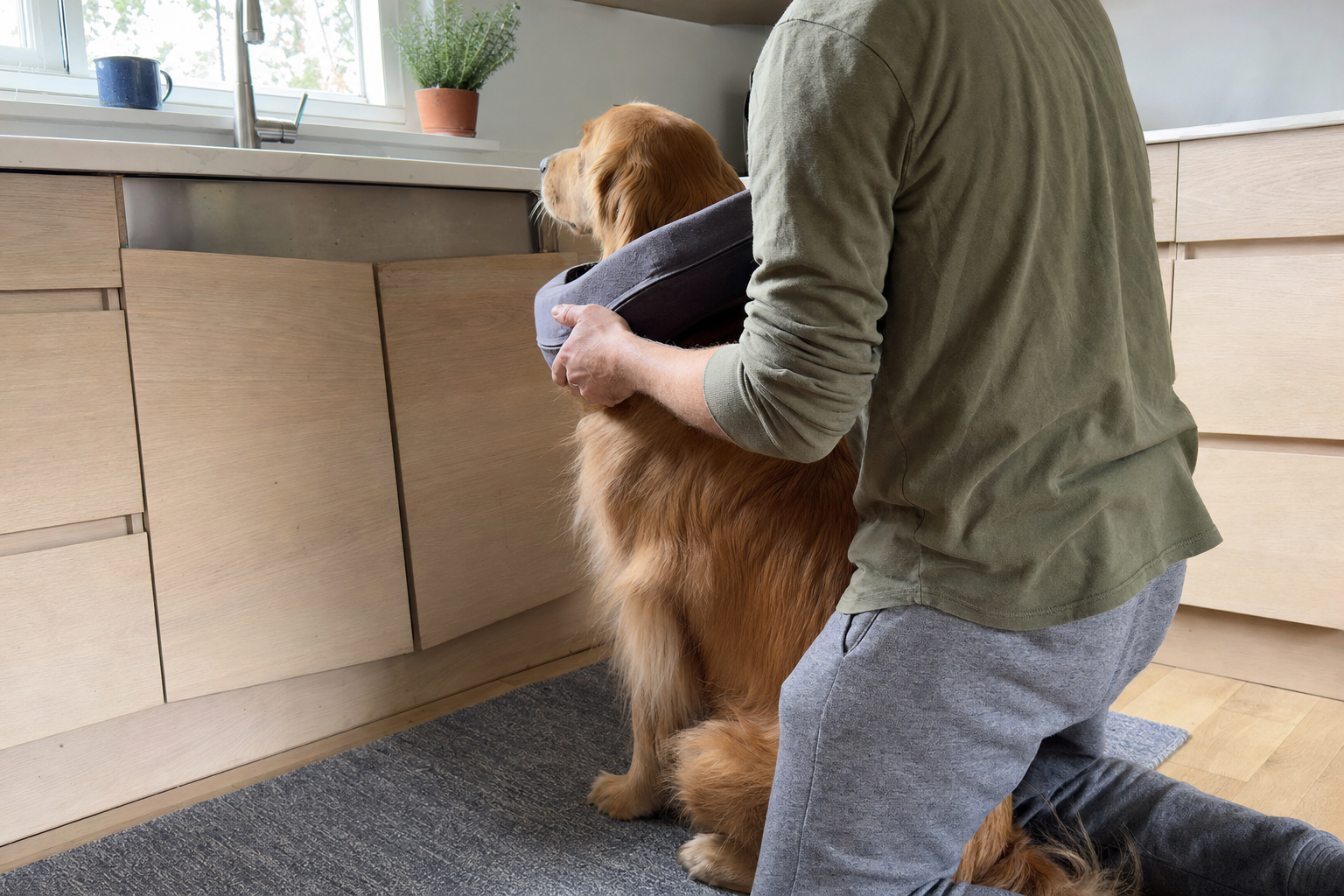
Hot spots that show up after a bath or a groom
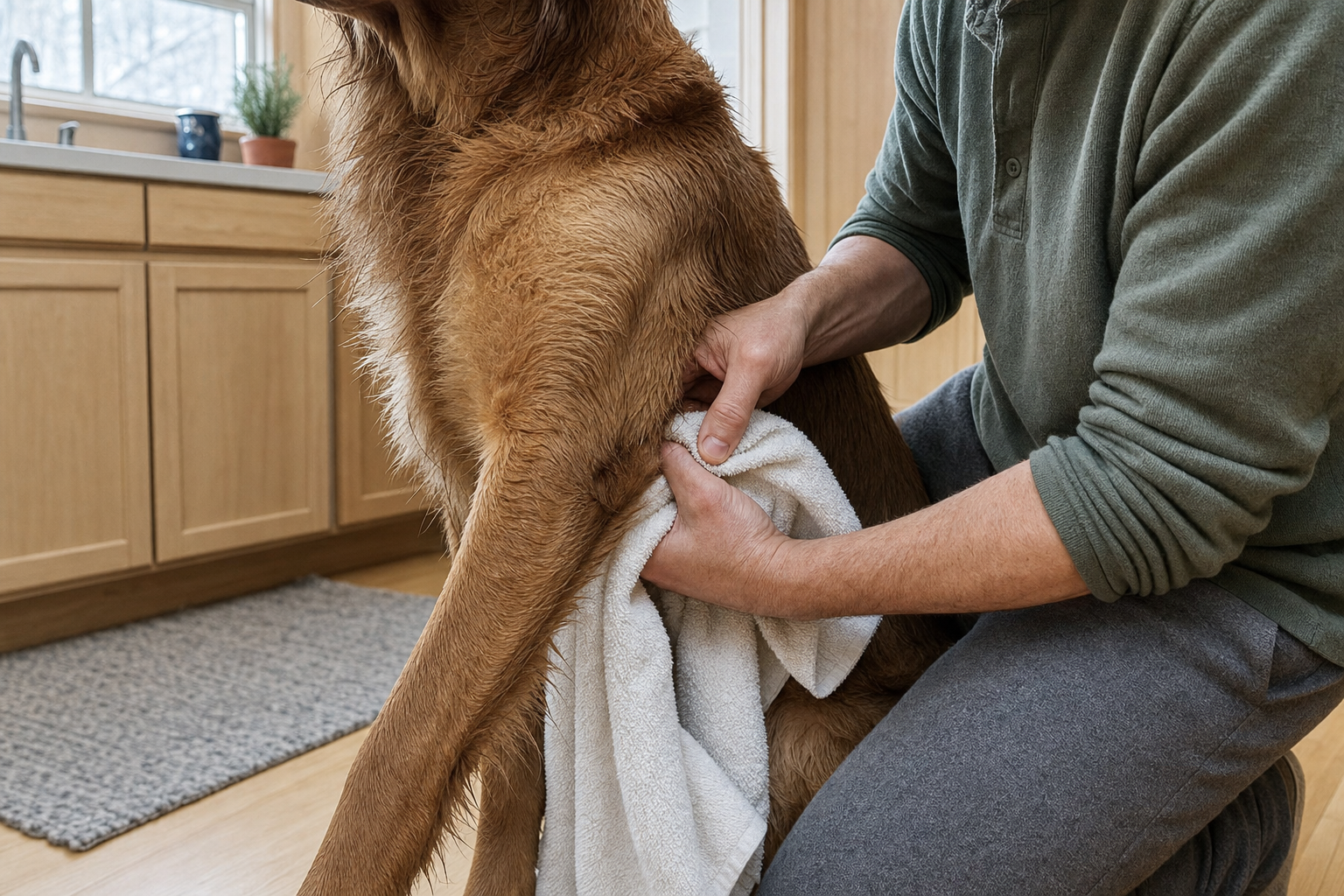
This is the one I get called about most, so it is worth saying plainly. A hot spot that appears a day or two after a bath is almost always about moisture that never left the coat. It is the same reason they show up after swimming or a wet walk.
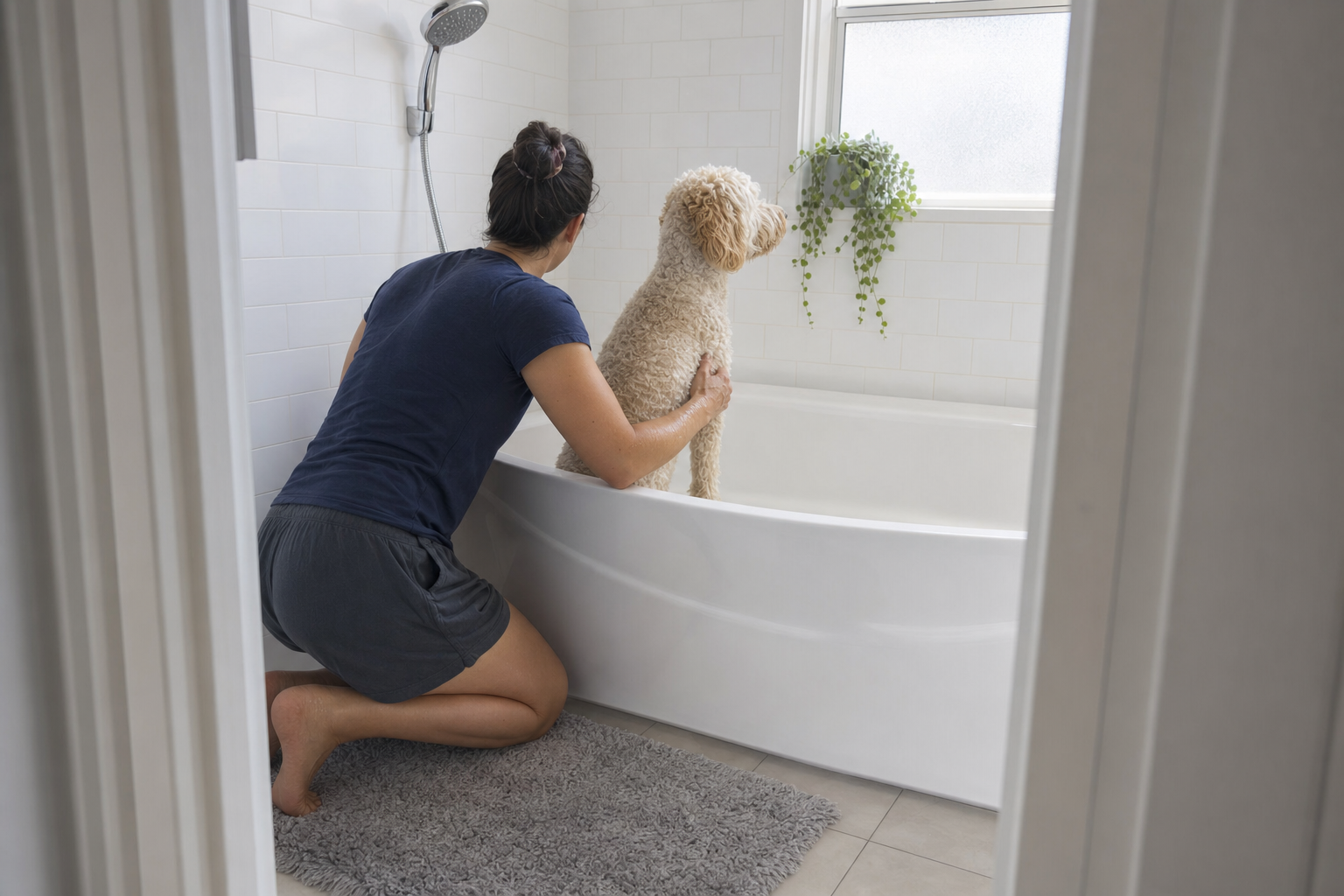
The spots that stay damp longest are the armpits, the groin, behind the ears, under the collar and the fold where the back leg meets the body. Those are also the places a towel tends to skate over. When you dry your dog at home, push the towel down into the coat in those spots and keep going until the skin underneath feels dry, not just the top of the hair.
Two other things can do it. A collar going back on over a damp neck traps water against the skin, so leave it off until your dog is properly dry. And clipper work on a very short trim can leave the skin sensitive for a day, so if your dog is prone to this, ask for a slightly longer blade next time and say why.
Why a packed undercoat keeps the skin wet
This is the part owners do not expect. A thick double coat that has not been brushed out properly holds water against the skin for hours after a swim or a bath. Skin that stays damp is where a lot of hot spots start.
The photo below is one visit's worth of dead undercoat off one senior dog. All of that was sitting down against the skin, holding damp and stopping air getting through.
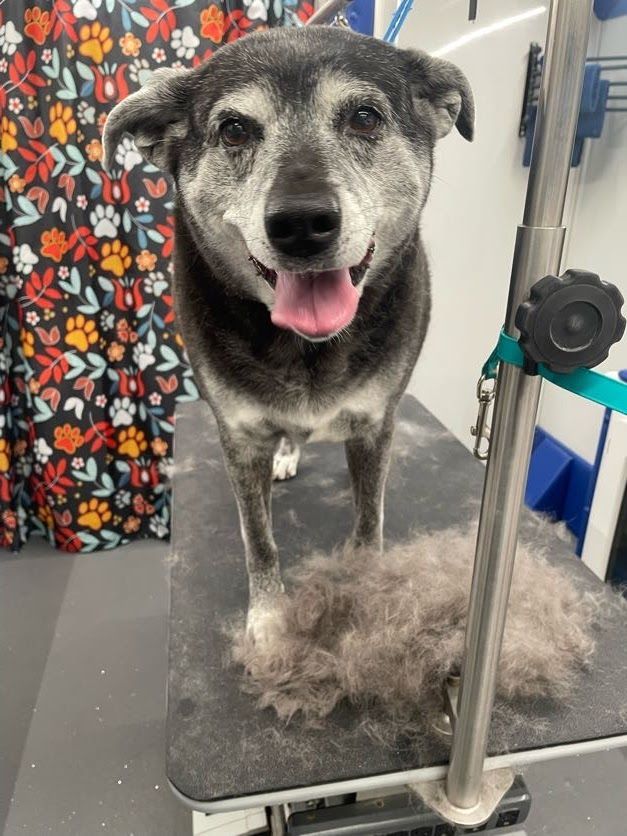
If your dog is a Golden, a Husky, a Shepherd or any thick coated mix, clearing that dead coat out is the most useful thing you can do to stop hot spots coming back. dog shedding goes through what the treatment involves and which coats it suits.
Getting back on the grooming schedule
Once the skin has healed, get back to a regular grooming rhythm. Hot spots often turn up after a groom that got put off, because the coat packs down and stops drying out the way it should.
Tell your groomer where the hot spot was, even after it looks fine. We will keep the clippers and the dryer off that patch, work around it, and check the skin while we are in there.
A lot of people around here find us by searching for mobile pet grooming in their own town, and we cover that side of Cumberland County.

Conclusion
A hot spot moves fast, so most of the outcome is decided in the first day: get the hair clipped back, keep the patch clean and dry, and stop the licking. After that, treat the cause rather than the patch, whether that is fleas, a coat that never dries, or a groom that got put off. If it is spreading, if it smells, or if your dog is in real pain, that is a vet visit and not a home remedy.
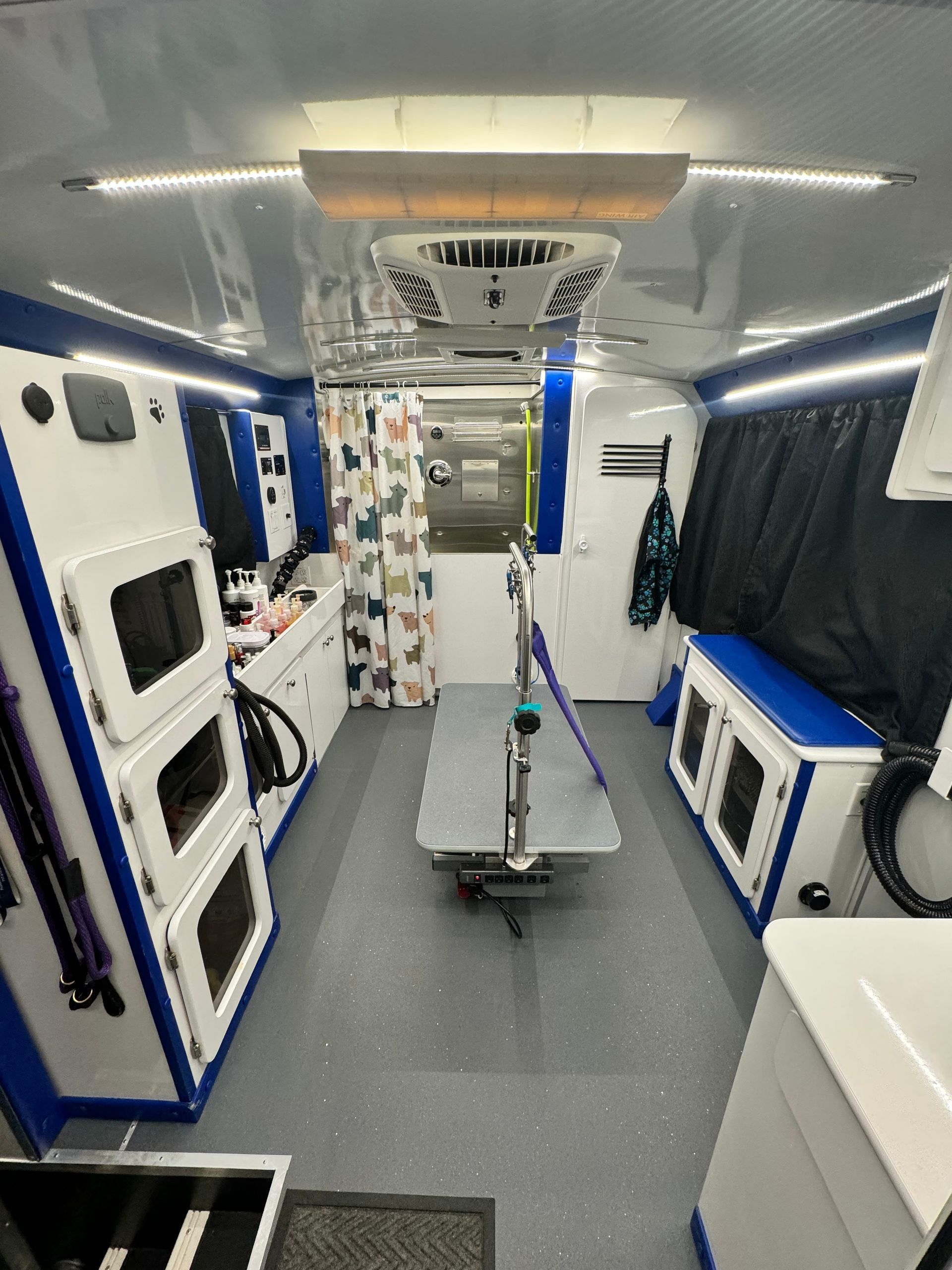
We groom dogs in a climate controlled van that parks in your driveway, one pet at a time. For a dog that is sore or nervous, that setting makes a real difference, because there is no car ride and nothing else going on around them.
Get in touch through the form, or call (717) 601-6176 and tell us what the skin has been doing. We will plan the visit around it.