Springer Spaniel Grooming for a Coat That Picks Up Everything
If your Springer Spaniel comes home from every walk with burrs, leaves and bits of the field tucked into the coat, you’re not alone. The real question isn’t “how short can it go?” It’s which parts of the coat cause the trouble, and how much of that classic spaniel outline you want to keep.
That’s the best way to approach Springer Spaniel grooming. A trim planned around your dog’s actual coat will almost always work better than a vague request to “take it all shorter.”
Happy Hounds Mobile Pet Grooming's full groom package gives Carlisle and Cumberland County owners a place to discuss coat care and styling together. Explain where your Springer's coat collects debris and what you can comfortably maintain at home. The best finish should fit the dog who lives with you, not just a reference photo.
Start With the feathering
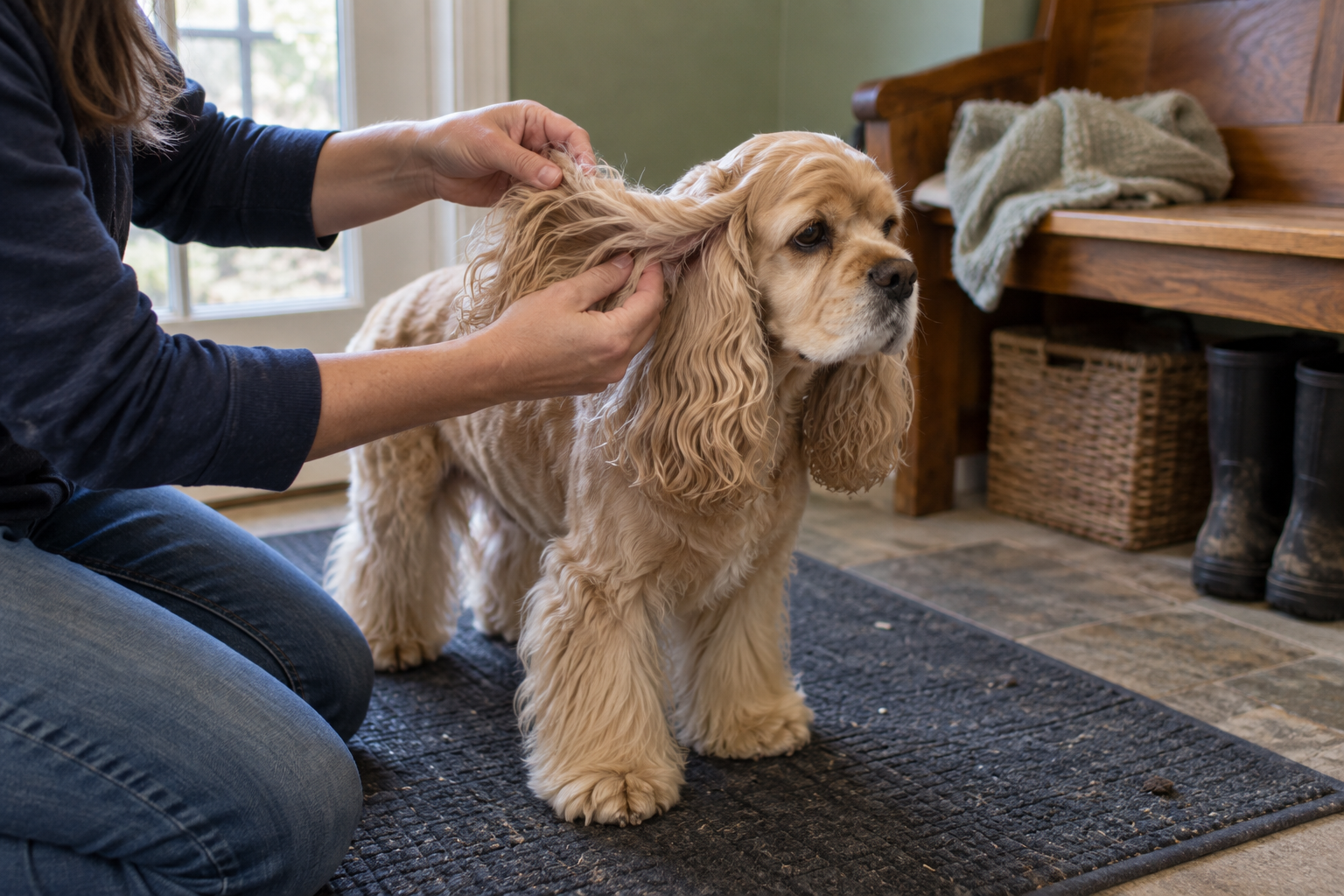
The American Kennel Club's English Springer Spaniel profile describes regular brushing and professional neatening as part of coat care. The breed's feathering makes the ears, chest, legs and underside important parts of the styling conversation.

After an ordinary outing, look at your dog from the side. Which areas pick things up? Which are easy to check? Which become difficult to brush? The spots that create the most work are often not the ones that stand out in photos.
Every Springer is a little different. Some have longer, fuller coats and some have lighter ones, so the finish that suits a neighbor’s dog may not suit yours.
Choose an outline you can keep up
A natural-looking finish can still include careful tidying. Tell the groomer which features matter to you: fuller ears, a recognizable chest outline or a tail left as it is. Then explain the problem you want solved.
For example, you might want to discuss reducing the length that collects debris underneath while keeping the ear feathering. That’s only an example, not a recommended cut. A groomer will look at your dog’s coat and comfort before agreeing on a plan.
It also helps not to lean too hard on photos of other breeds. Avoid using a Cocker Spaniel photo as if it sets the exact target for every Springer. Breed-specific references can help, but your own dog's current coat is the better guide. And instead of choosing by style name, ask what will look different once the trim is done.
Check the coat after walks
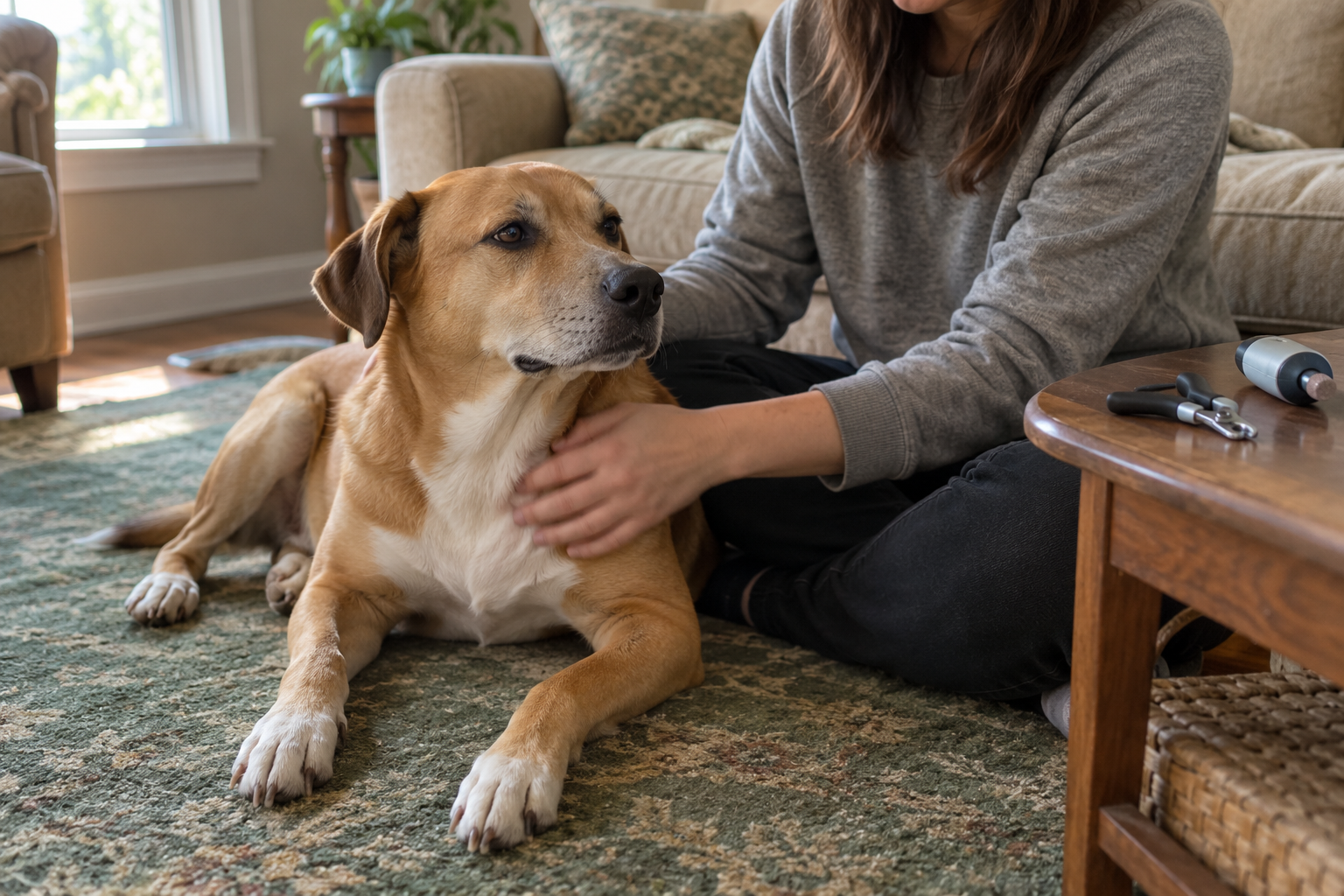
The goal of a post-walk check is simple: catch loose debris and early tangles before you start pulling at the hair. Use good light, and stop if your dog isn’t comfortable. If something is caught tightly, near the skin or in an uncomfortable area, stop and ask for professional help.
Do not cut blindly into feathering with household scissors. Skin is hard to see under tangled hair, and a few saved inches of coat aren’t worth an injury. Describe the location to the groomer and ask what the appropriate next step should be.
If an object appears embedded or the dog is painful, contact your veterinarian rather than treating it as ordinary grooming debris.
A quick routine after each walk:
- Notice where debris collects most often.
- Separate easy surface care from a tangle that resists gentle handling.
- Make a note of any spots your dog doesn’t like being touched.
- Tell the groomer which feathering you want retained.
- Ask whether a light tidy could make your home routine easier.
Ear hair and ear discomfort aren’t the same thing
A Springer's ears deserve attention during grooming sessions. Long ear feathering can tangle, and that’s a normal thing to bring up with a groomer. Mention it if the hair has matted so the plan can account for keeping it neat.
A new smell, discharge or apparent pain needs veterinary attention. Do not assume a shorter ear trim or a more thorough cleaning will identify the cause. If your veterinarian provides care instructions, pass them to the groomer before the appointment.
The same goes for the rest of the coat. A muddy patch is one thing; irritated skin beneath it is another. Clear descriptions help the professionals decide which part belongs in a grooming visit and which needs a medical assessment.
Ask to be shown the home routine
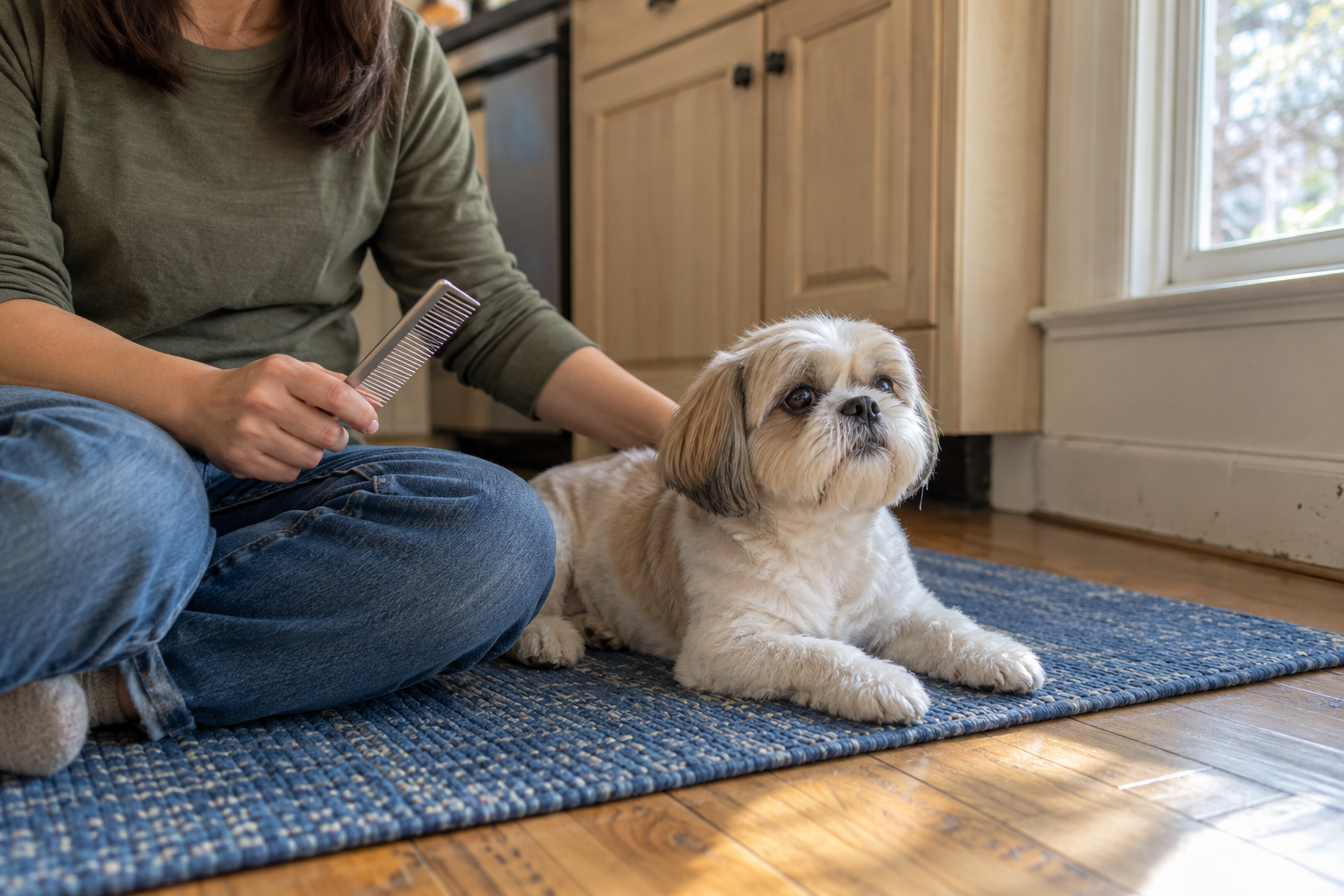
A grooming tool is useful only if you understand how to use it comfortably on your dog's coat. Ask the groomer to show you how to work through the areas you struggle with. Check that you can recognize resistance without scraping, tugging or repeatedly working one spot.
Be honest about how much time you have. If you cannot manage a fuller outline, it is better to discuss a more practical finish than repeatedly arrive with the same tangles. That’s a sensible decision, not a failure to appreciate the breed.
After the groom, pay attention to which areas get difficult first. Those notes help determine whether the chosen style is working for your dog. A useful follow-up conversation is based on what happened between visits, not just how the dog looked immediately afterward.
Agree on the plan before the van arrives
Confirm your address and any access needs with Happy Hounds Mobile Pet Grooming. If coat photos are requested, send them, but keep in mind the final plan may change once the groomer sees the coat in person. Mention any handling difficulties and current vet instructions early.
Ask how the groomer will communicate if the coat condition requires a change from your preferred outline. At the handoff, repeat the features you most want to keep. Afterward, ask what was done and what upkeep will help at home.
Make the next trim solve a real maintenance problem. Share where your Springer's coat catches debris when arranging Happy Hounds Mobile Pet Grooming. Ask for a finish that balances the spaniel outline you enjoy with the care you can comfortably provide. Discuss your dog’s grooming needs.