
Dog Nail Grinding vs Clipping for Dogs Who Dislike Nail Care
Some dogs hold out a paw for a nail trim. Others disappear under the kitchen table the moment the clippers come out. If yours is the second kind, the dog nail grinding vs clipping question is really about which one your dog finds easier, and how to get there gently.
For Mechanicsburg dog owners, here's how the two tools differ, which dogs tend to do better with each, and the small, patient steps that help a nervous dog feel safer about nail care.
Quick answer: clippers snip off a small piece of nail in a moment, while a grinder files the nail down gradually and leaves a smooth edge. Some dogs tolerate grinders better and others prefer clippers, so the right tool is the one your dog can relax with. Take small amounts, go at your dog's pace, and stop for a break whenever your dog needs one.
Compare the sound, sensation and finish
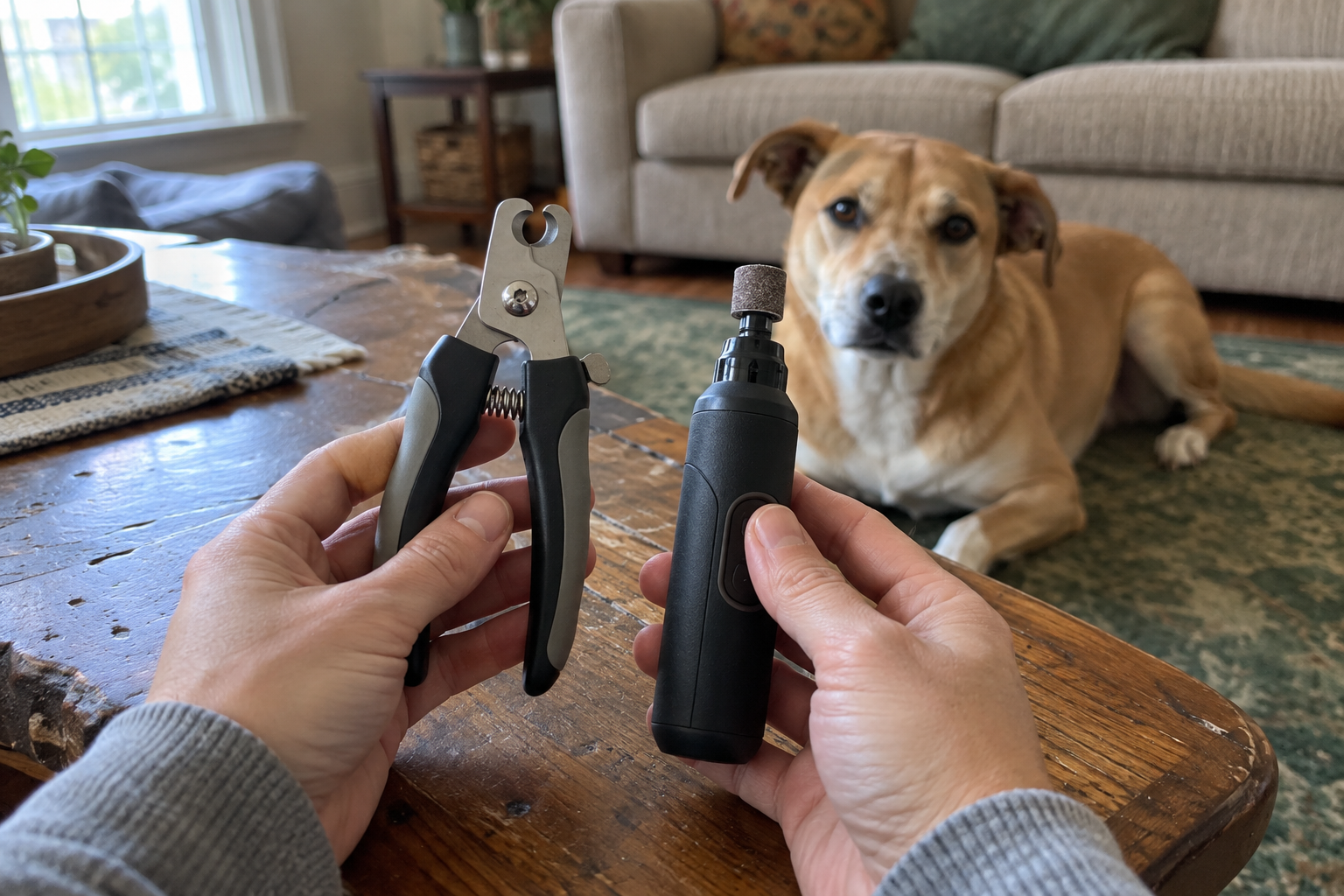
Clippers take nail length off quickly, with a short squeeze and a snip. A grinder works more slowly: a rotating sanding head files the nail down bit by bit. That means a steady motor hum, a little vibration and a few more seconds near the paw.
The American Kennel Club's nail-care guide says both tools are safe when used correctly, and notes that some dogs tolerate grinders better while others prefer clippers. What suits a friend's dog may not suit yours.
| Consideration | Clipping | Grinding |
|---|---|---|
| How length is removed | Cuts off a small piece | Files away small amounts |
| Sound | Brief cutting sound | Motor noise while running |
| Sensation | Short pressure during the cut | Vibration during contact |
| Finish | May leave an edge that needs smoothing | Can round and smooth the edge |
| Main practical limit | Requires careful placement and control | Requires tolerance of sound and contact |
| Safety boundary | Must avoid the sensitive quick | Must also avoid the quick and excess contact |
Some owners use both: clippers for length, then the grinder to smooth the edge. A relaxed dog may take that in stride, while a worried one usually does better with one tool and a shorter session.
Which dogs may prefer clipping and which may do better with grinding
Every dog is different, so think of this as a starting point rather than a rule:
- Clipping may suit dogs who startle at buzzing or vibration, and dogs who cope better with a few quick moments than a longer session.
- Clipping can also be easier on light-colored nails, where the pink quick inside is easier to see.
- Grinding may suit dogs who flinch at the snap and squeeze of clippers, or dogs who do better with gradual, gentle progress.
- Grinding helps when you want a smooth, rounded edge, for example on a dog with sensitive paws or nails prone to rough edges.
- On dark nails, grinding small amounts at a time makes it easier to watch for the chalky white ring the AKC describes as a sign to slow down.
Try one tool at a time and watch how your dog responds. Their body language will tell you more than any chart.
Notice which part your dog actually dislikes
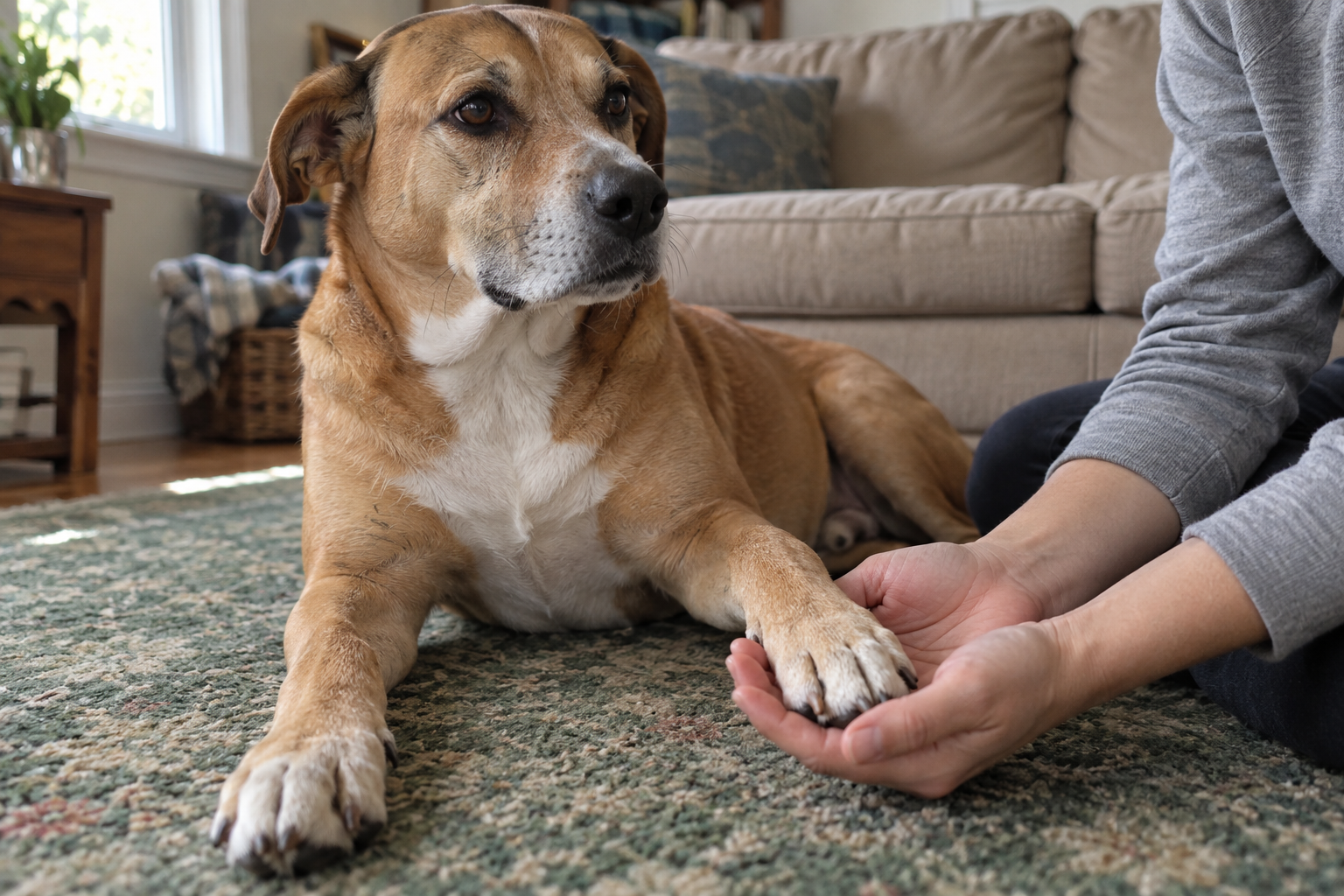
Think back to the moment your dog first gets uneasy. Is it when you reach for a foot? When the tool appears? When the motor starts? Or only when a nail is touched? Each of those is a different starting point, and switching tools may only help with one of them.
A dog who pulls away before any tool shows up may need help getting used to paw handling, or a vet check for a sore spot. A dog who happily rests a paw in your hand but leaves when the grinder hums is telling you something different. Watch for small signals too: a head turn, a stiff body, a lifted lip or an attempt to walk off. Those are your cue to slow down and give your dog some space.
At Happy Hounds, dog nail trimming and grinding includes a precision grind for an ultra-smooth finish, ideal for sensitive paws or pets prone to rough edges.
AKC nail-care tips for trimming at home
If you trim at home, the AKC's guide offers practical habits worth following:
- Most dogs need nail trims every three to four weeks, depending on how active they are.
- Keep styptic powder or another clotting powder nearby in case a nail bleeds.
- On dark nails, watch for a chalky white ring, a sign you are getting close to the quick.
- Take off only a small amount at a time, and support the toe firmly but gently.
- Don't forget the dewclaws on the inner side of the paw.
With a grinder, keep long fur away from the spinning head, touch the nail briefly and lightly, and follow the tool's instructions. With clippers, a sharp, well-sized pair gives you much better control than an old or oversized one.
Help a fearful dog step by step
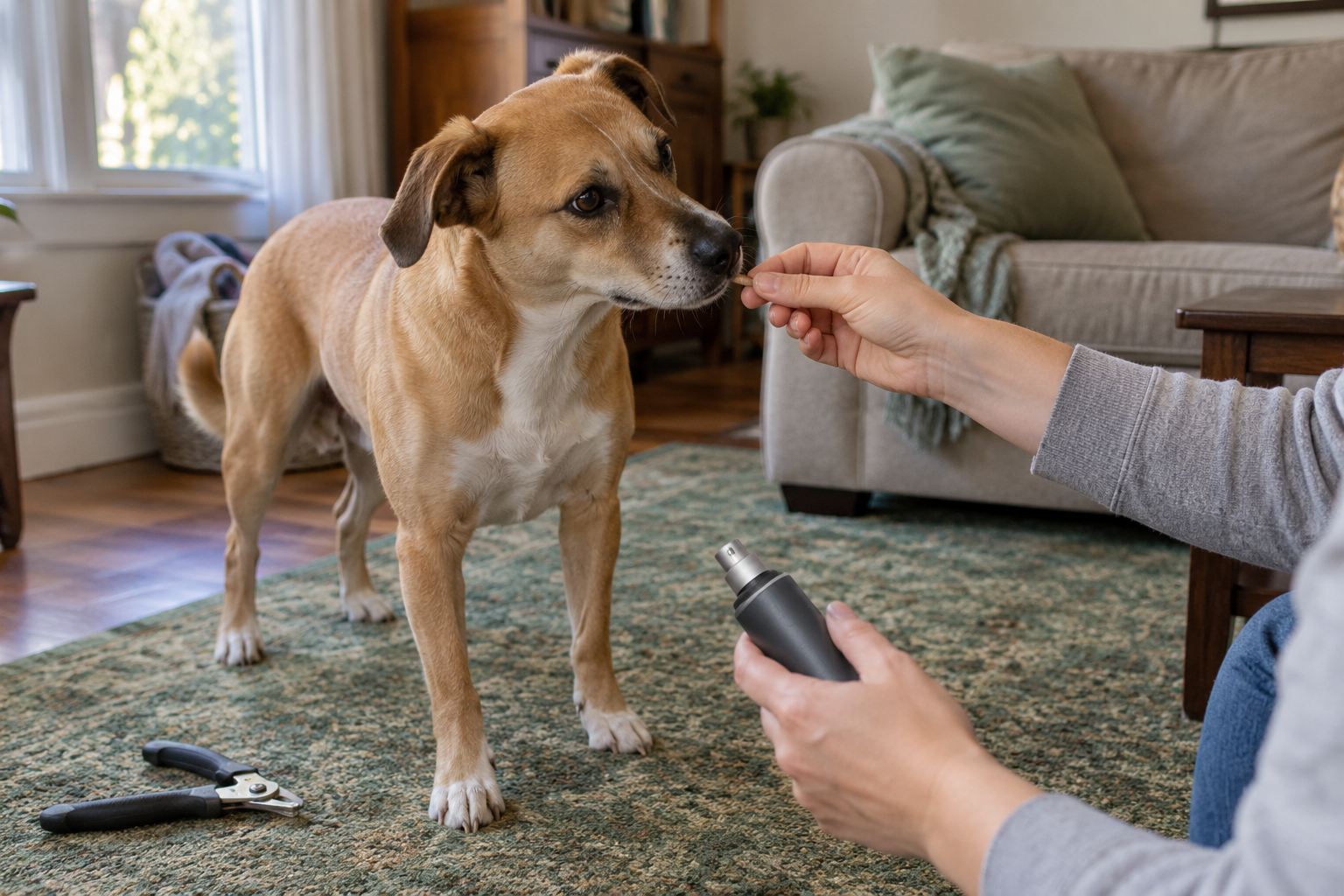
For dogs who are truly scared of nail care, VCA's veterinary guidance recommends gradual training before any trimming. Pair each touch with calm praise and a treat your dog loves, and pause at the first subtle sign of stress. For a dog with existing fear, VCA says the same steps work, just more slowly and with more care.
- Let your dog see the tool from a distance, with no paw handling yet.
- Touch a paw briefly, then reward.
- Hold a paw for a moment, then reward.
- Show a switched-off grinder, then let your dog hear it running from across the room.
- Trim or grind a single nail, then celebrate and stop for the day.
There's no deadline for moving through these steps. Repeating an easy one until your dog is relaxed is real progress, even on days when no nail gets shorter.
Know when to pause or ask for help
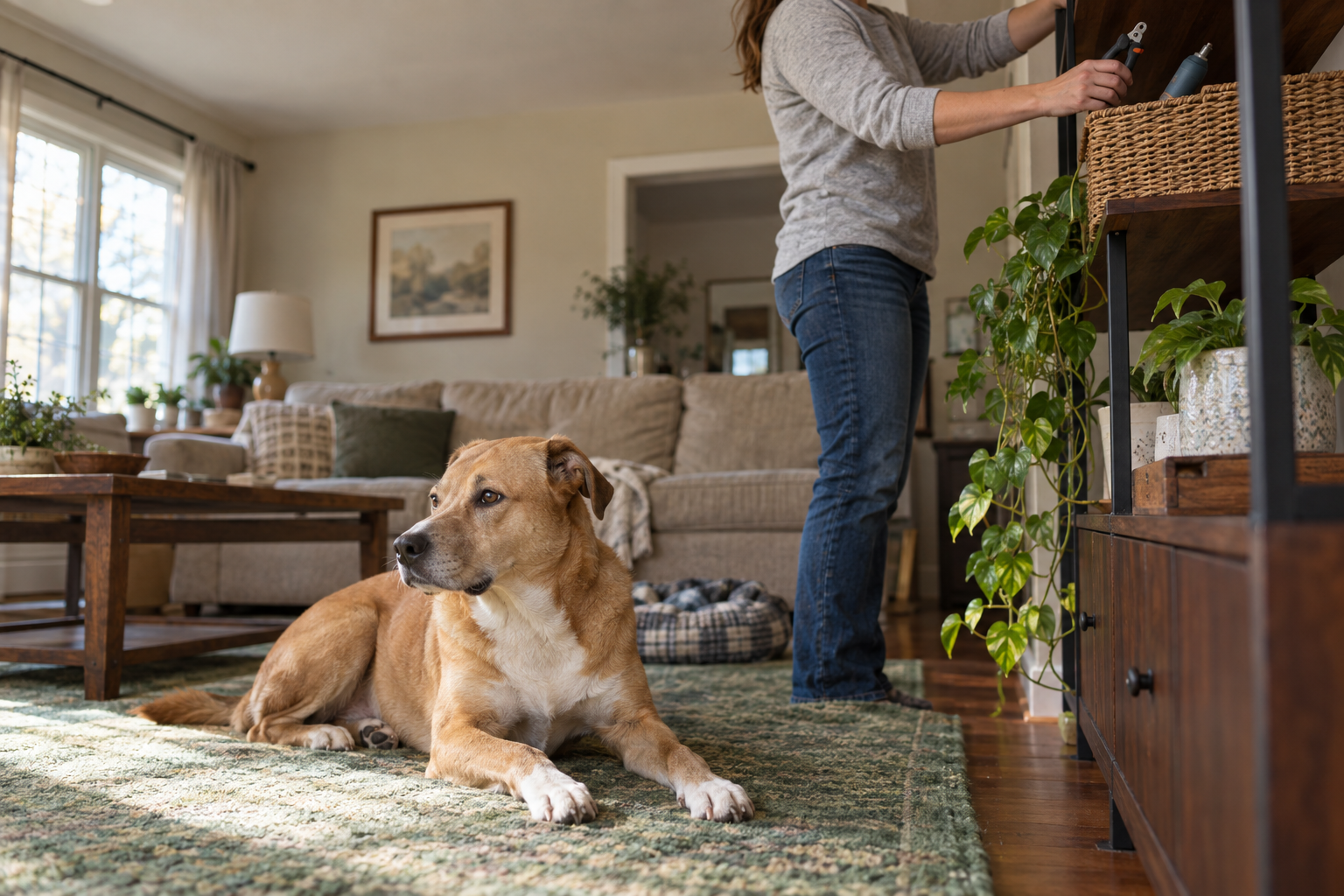
Take a break if you can't hold the paw steadily, if your dog is getting more upset, or if you can't see the nail clearly. Finishing the last two nails tomorrow is far better than forcing them today.
VCA notes that trembling, heavy drooling, panting, growling or snapping are signs of extreme fear, and that it is best to talk with a veterinarian. If the nails are already very long, your vet can use a light sedative to trim them quickly, with no fear or struggle involved. Broken nails, swelling, bleeding that will not stop or obvious pain also call for a vet visit.
Between trims, take a quick look at the paws as part of your routine. Walks on pavement wear nails unevenly, so a regular check catches long nails before they bother your dog.
Nail care that fits your dog
Grinding or clipping, the better choice is the one your dog can relax with. Small amounts, a patient pace and well-timed breaks make every future nail trim a little easier.
Happy Hounds brings mobile pet grooming in Mechanicsburg right to your driveway, so your dog skips the car ride and the busy salon. Grooming happens one-on-one in a fully equipped van, with zero crates and minimal distractions, and the team uses patient, calming, positive-reinforcement techniques with anxious pets. Nail trimming and buffing come with the Bath and Full Groom packages, and for nail-only care, contact Happy Hounds before booking.