
What Dog Breeds Need Hand Stripping: A Grooming Guide

August 28, 2025

Caring for a dog's coat isn't just about keeping it clean; it's also about maintaining its health. Some breeds grow a wiry top layer of fur that doesn't shed on its own. For these dogs, brushing and bathing alone aren't enough to keep the coat healthy. That's where dog hand stripping comes in. This technique removes old, dead hair by gently pulling it out, allowing new, strong fur to grow in its place.


When done correctly, hand stripping keeps the coat looking neat, protects the natural texture, and helps prevent skin problems. It's essential for breeds with wire coats, as clippers can cause the fur to become soft and dull over time.

This guide explains why certain breeds benefit most from this type of grooming, how it supports coat health, and what pet owners should know before scheduling an appointment with a mobile dog groomer


What is Hand Stripping?


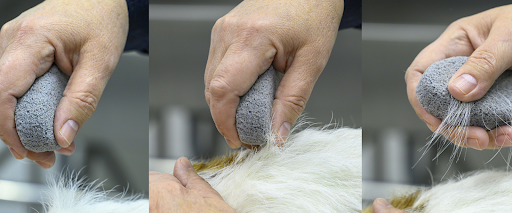
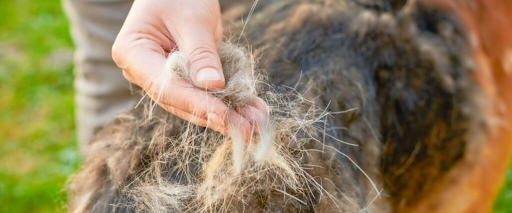
Instead of trimming fur with clippers, this method involves carefully pulling out loose, dead hairs by hand or with a stripping knife. A hand stripping dog coat guide explains that because the hair is removed at the root, the coat remains strong and retains its natural texture.

Clipping, on the other hand, only shortens the top layer of fur. Over time, this can leave a wire coat soft, dull, and more prone to matting. Hand stripping encourages new, healthy growth and helps the coat keep its original color and shine.

This process offers several benefits. It keeps a breed’s coat looking the way it was meant to, supports a proper growth cycle, and may even help lessen shedding for some dogs. For families with allergies, it can also be a more comfortable option compared to heavy seasonal shedding. Using the right dog grooming tips can make the process smoother for both pet and owner.
hand+stripping+dog+coat+guide

Dog Breeds That Require Hand Stripping


Dogs with rough, wiry coats often require this specialized grooming method to maintain healthy fur. These coats are coarse and bristly, so they don’t shed in the same way softer coats do. Instead, the old hair stays in place until it’s pulled out, which is why breeds requiring hand stripping benefit so much from this technique.


Some common dog breeds that require hand stripping: 


  • Schnauzers (Miniature, Standard, and Giant)
  • Terriers such as Wire Fox, Norfolk, Norwich, Border, Scottish, and West Highland White
  • Wire-haired Dachshunds
  • Irish Wolfhounds
  • Brussels Griffons
  • Wire-haired Pointing Griffons


While it's possible to clip these dogs instead, doing so over time can alter the coat's natural appearance and texture. Hand stripping helps maintain the original texture, keeping the fur wiry, vibrant, and protective. Regular dog grooming   plays a significant role in supporting these coats at their best.


Why Hand Stripping is Necessary for These Breeds


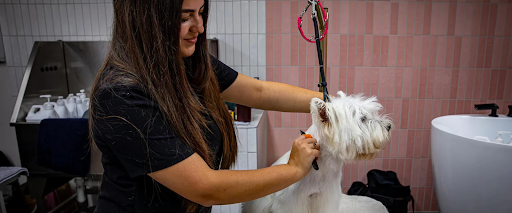
Wire-coated dogs have a unique coat structure made up of a tough outer layer and a softer undercoat. When the dead hairs aren't removed, the coat can lose its texture and become heavy. Proper wire coat dog grooming helps maintain balance, while regular dog hand stripping keeps the wiry coat strong and true to its natural feel.


For dogs shown in competitions, this technique also helps preserve the actual breed-standard appearance. Judges look for a firm, bristly coat rather than a soft one that comes from repeated clipping.


The health benefits are just as significant. Regular hand stripping reduces the risk of matting, minimizes skin irritation, and promotes the growth of healthy, strong hair. It also makes the coat easier to manage between grooming visits.


Beyond health, there are aesthetic perks. The process preserves the coat's natural color, adds shine, and ensures these breeds maintain their bold, rugged look that makes them stand out. 


The Hand Stripping Process


1. Preparation


Begin
grooming preparation by starting with a clean, dry coat. Use a slicker brush to remove dirt and tangles, and apply chalk if needed to improve grip when doing dog hand stripping. A thorough professional dog bath before the hand stripping session ensures the coat is clean and free of oils or products that could interfere with the stripping process.

2. Tools Needed


The main tools for hand stripping include a stripping knife, grooming stone, or finger cots to help grip the hair. A slicker brush and detangling comb are used throughout the session to detangle dog hair, while small clippers or scissors are used for finishing touches.


3. Technique


The groomer pulls out dead hair in the direction they naturally grow, focusing on dull strands that are ready to shed. Following a hand stripping dog coat guide, a professional pet groomer typically begins with easier areas, such as the back and sides, before carefully moving on to the legs and face.


4. Finishing Touches


At the end, loose hairs are brushed away to leave the coat smooth and neat. Sensitive areas, such as the underbelly, are often finished with a
professional grooming haircut using scissors rather than being stripped, ensuring delicate zones are handled with precision.


5. Time Required


Depending on the breed and coat condition, the entire process may take anywhere from one to three hours. To keep coats looking their best, many owners also schedule a complete
dog grooming package for extra care.
breeds+requiring+hand+stripping

At-Home vs. Professional Hand Stripping


At-Home Hand Stripping


Some owners prefer to try the process themselves, but it requires practice and the right equipment. If you feel confident grooming your own dog, start with small areas, reward your pup with treats, and take breaks to keep the experience positive. 


Professional Hand Stripping


For owners who want accuracy, especially with show dogs, a professional is the best choice. They understand breed-specific coat patterns and have the experience to make the process comfortable for the dog. The cost of professional sessions varies depending on the breed, coat condition, and location, but is generally considered an investment in the dog's health and appearance. Many choose this option along with
grooming benefits for added convenience.


Maintaining a Wire Coat Between Hand Stripping Sessions


Regular Brushing


Keeping up with weekly brushing helps stop tangles before they start. After bathing, a
hand fluff drying and brushing session is especially beneficial for wire-coated breeds, as proper drying technique helps the coat stand correctly and prepares it for the next stripping cycle. A slicker brush is excellent for removing dirt and loose hairs, keeping the coat in good shape between grooming visits. 

Bathing


Wire coats stay healthiest when bathed only as needed. Too much bathing can dry out both the coat and skin. Choose a
deep clean with premium shampoo or one made for wire-haired breeds to protect the coat's texture.


Detangling


A sturdy metal comb is best suited for tackling knots, especially in areas that rub frequently, such as the armpits or the back of the ears.


Skin Care Checks


Because these breeds can be prone to irritation or allergies, it's wise to monitor their skin closely. Catching problems early makes grooming easier and keeps your pet more comfortable. Following basic wire coat dog grooming habits ensures the coat stays strong, shiny, and easy to manage. For extra comfort, groomers may suggest dry dog skin remedies to soothe irritation.
wire+coat+dog+grooming

Common Mistakes to Avoid


1. Clipping Instead of Stripping


Using clippers may seem more manageable, but it changes the natural texture of a wire coat. Over time, the fur becomes soft and loses the crisp look that hand stripping maintains.

2. Stripping a Wet Coat


Trying to remove hair from a damp coat causes pulling and discomfort. Always work on a clean, dry coat for the best results.


3. Rushing the Process


Hand stripping takes time. Moving too quickly can leave uneven patches or make the dog uncomfortable. Patience is key to safe and effective grooming.


4. Skipping Maintenance


Letting too much time pass between sessions allows mats and tangles to form. Regular upkeep ensures each session runs smoothly and maintains the coat in good condition. A hand stripping dog coat guide can be a helpful reminder of best practices to follow. 


FAQs


1. What is the difference between hand stripping and clipping?


Hand stripping removes dead hair by pulling it out, preserving the coat's texture. Clipping cuts hair, which can soften a wire coat over time, changing its natural look.

2. Is hand stripping painful for dogs?

When done correctly, dog hand stripping is not painful. Experienced mobile pet groomers use gentle techniques to ensure your dog stays comfortable.

3. How do I know if my dog needs hand stripping?

If your dog has a wire coat or is a breed like a Schnauzer or Terrier, they likely need a hand stripping dog coat guide. Consult a professional groomer to confirm. 

Conclusion


Keeping a wire coat in top condition takes more than brushing and bathing. Regular dog hand stripping is what helps these breeds keep their natural texture, healthy skin, and vibrant color. This method supports coat health, prevents matting, and preserves the bold look that wire-haired breeds are known for.

With patience, the right tools, and practice, some owners can learn the basics at home. However, for accuracy and comfort, especially with show dogs, consulting a professional groomer is often the best choice.


If you'd like expert help, you can contact us at Happy Hounds to book a grooming session and keep your dog looking its best.
By Lauren Hannold June 24, 2026
What actually happens during a first mobile dog grooming visit in Harrisburg, PA. Bath package, full groom, pricing by coat type, and what to expect. Cockapoo named Wren came up for her first mobile appointment last spring. Her owner had tried two Harrisburg-area shops. Both times, Wren came back shaking. So we parked the van at the end of the driveway and let her sniff around the ramp for about four minutes before we started. The groom took forty-five minutes. She fell asleep during the blow-dry. Quick answer: Dog grooming in Harrisburg, PA through a mobile service means a fully equipped van parks outside your home, and your dog gets a one-on-one session with no other animals, no kennel wait, and no drop-off. Most visits run 45 minutes to 2 hours depending on size and coat. What Happens When You First Book a Mobile Appointment Booking works through a short intake form covering size, breed, coat condition, and any behavioral notes. No in-person consultation required for most dogs. We schedule based on Harrisburg-area route days, so availability depends on which neighborhoods we are running that week. Camp Hill and Enola slots typically fill faster than others. Most first-time bookings land within one to two weeks of the initial request. You get a reminder the day before and a heads-up text when the van is about twenty minutes out. No need to be standing outside waiting. Just make sure there is enough room in the driveway for the van to park, roughly the footprint of a large pickup truck. A one-car driveway works fine. Street parking in front of the house also works when the driveway is tight. What the Van Looks Like When It Parks Outside The van is a fully enclosed grooming unit. Climate-controlled, so summer heat and Pennsylvania winter cold do not affect the session. Inside: a hydraulic grooming table, professional-grade dryer, a water-heating system with a self-contained tank, and storage for all tools. It is roughly the footprint of a large bathroom, compact but fully equipped for full grooms, baths, and de-shed treatments. Most dogs are curious about it before they are nervous. The smell is not the same as a shop because no other animals have been through before them that day, which makes a real difference for dogs that are scent-sensitive. The ramp angle is gentle enough for senior dogs and small breeds. We never rush the first introduction. If a dog needs a few minutes outside the van before walking up the ramp, that is part of the appointment.
By Lauren Hannold June 22, 2026
What a de-shed treatment actually removes from a dog's coat, how it differs by breed, and when to book one near Harrisburg, PA. Real numbers, no vague answers. Lab named Duke came in last April. His owner mentioned that Duke sheds 'a bit.' On the table, it turned out Duke shed approximately the weight of a small rabbit every week. Spring blowing-coat season on a black lab. We ran the high-velocity dryer for eleven minutes before the brush even touched the coat. The pile of undercoat on the table afterward was about four inches high. Duke's owner stood outside watching through the van window and messaged afterward to say she had not seen his actual coat color in three months. Quick answer: A de-shed treatment near Harrisburg, PA uses a high-velocity dryer and systematic brushing to remove loose undercoat before it ends up on your floors. It is not a blow-dry with some extra brushing — it is a distinct process that physically dislodges dead undercoat that regular brushing cannot reach. Results last four to six weeks on most double-coated breeds. What a De-Shed Treatment Removes That a Regular Bath Does Not A standard bath wets and rinses the coat. A regular brush-out removes the surface layer of loose fur. Neither one reaches the undercoat effectively. The undercoat on a double-coated dog sits below the guard hairs in a dense, insulating layer. When a dog is shedding, that layer loosens from the skin but does not always exit the coat on its own — it compacts against the skin instead, which creates the clumping and matting you see on labs, shepherds, and goldens mid-shed. The de-shed treatment for dogs works differently. First, a high-velocity dryer blows through the coat at high speed, physically separating the loose undercoat from the guard hairs and pushing it to the surface. Then a slicker brush and a deshedding tool work through the coat section by section. On a dog with a full coat in active shed, the process removes several times more undercoat than any regular brushing session could.
By Lauren Hannold June 15, 2026
Which mobile grooming add-ons are worth it in Carlisle, PA and which are not, based on your dog's coat type. Hydro-massage, premium conditioning, fragrance, and more. Standard poodle named Oliver came in last November for a full groom. His owner asked about add-ons for the first time and picked the premium conditioning treatment almost as an afterthought. When Oliver came down the ramp, his owner ran a hand through his coat and went quiet for a second. Then she said: why has no one told me about this before. The coat felt different. Not just clean, but actually softer than it had been in months. Quick answer: Mobile grooming add-ons in Carlisle, PA extend or improve the base bath or full groom. The ones worth getting depend almost entirely on coat type. Premium conditioning is worth it for long or dry coats. Hydro-massage makes the most difference for bigger dogs. Fragrance is an aesthetic choice, not a grooming benefit. What Premium Conditioning Does for Long or Dry Coats The standard bath uses a professional shampoo and a light conditioner rinse. The premium conditioning treatment is a leave-in or deep-condition step that goes on after the rinse and sits in the coat before the blow-out. For dogs with long coats, curly coats, or coats that tend to frizz or dry out in winter, this is the add-on that actually changes how the coat looks and feels between appointments. It matters most for doodles, poodles, cockers, and any dog with a coat that gets tangly or straw-like between visits. For short-coated labs or boxers, the effect is real but subtler — the coat gets a slight sheen and feels a bit softer, but nothing as dramatic as it is on a long coat. If you have a short-coated dog and are choosing between add-ons, there are better options for that coat type. Why Hydro-Massage Makes the Most Difference for Bigger Dogs The hydro-massage add-on uses a pulsing water pressure attachment during the bath phase to work through the coat and against the skin. It loosens dirt more effectively than a standard rinse on thick or heavily-coated dogs, and for older dogs with stiff joints, the warm water pressure at the skin level genuinely seems to help them relax during the bath. Most dogs over 50 pounds are better candidates for this than small breeds. Small dogs get a less noticeable benefit from hydro-massage because their coats are easier to saturate without it. The water pressure that is therapeutic on a 75-pound lab is a bit much for an 8-pound maltese. If you have a small dog and are eyeing add-ons, premium conditioning tends to be a better choice.
By Lauren Hannold June 9, 2026
How mobile dog grooming in Mechanicsburg, PA changes the experience for anxious, reactive, and senior dogs. What we do differently and why it works. 
By Lauren Hannold June 1, 2026
How a mobile dog grooming van is actually set up, what equipment runs inside it, and what a typical one-dog session looks like in Carlisle, PA. Yorkie named Peanut went from forty-five minutes in a shop to twelve minutes start to finish in the van. Not because Peanut got faster. Because there was no kennel wait, no holding area, no time spent stressing between steps. The math on a one-dog session is just different. Quick answer: A mobile grooming van in Carlisle, PA is a self-contained unit. It runs its own water, its own power, and does one dog at a time. Typical sessions run 45 minutes to 90 minutes depending on coat and size. No other dogs. No drop-off window. How the Van's Water System Works The van carries its own water. A 40-gallon fresh-water tank and a separate 30-gallon drain tank sit in the rear of the unit. Water runs through an on-demand propane water heater, so the temperature stays consistent throughout the bath regardless of outside temp. We refill the fresh-water tank at base between routes. No hookup needed at your house. One thing that surprises people: the water pressure inside the van is calibrated for dogs, not for a car wash. It is strong enough to rinse a thick double coat but not so forceful that it spooks a small breed. The showerhead sits on a flexible hose, so we can direct it under the belly, behind the ears, and down the legs without repositioning the dog. What the Generator Powers During a Session Most route-ready vans run a 7.5 or 10 kW generator. Ours pulls around 18 to 24 amps at peak, which is when the dryer and the climate system are both running. The generator is mounted in a soundproofed housing at the rear, so you hear a low hum outside the van but almost nothing inside. Dogs are not reacting to generator noise — that part of the build matters. The climate system runs off the generator too, which is why mobile grooming works in January and August. A shop with no AC does a bad job drying in summer. A van at 72 degrees year-round does a consistent job every time.
By Lauren Hannold May 27, 2026
A Carlisle, PA mobile dog groomer explains how we safely take a pelt off a dog, when to demat vs. shave, and why a vet visit sometimes comes first. TL;DR. A real dematting visit takes longer than a normal groom and sometimes ends in a vet referral instead of a haircut. If the mats are pelted to the skin, we shave it short and start the coat over. We don't sit there pulling a brush through a screaming dog for two hours. 
By Lauren Hannold May 19, 2026
A working groomer breaks down the mobile dog nail trim visit in Mechanicsburg, PA, the grinder-paw-quick technique, and when your dog should see a vet first. Q uick answer. A mobile dog nail trim happens in a temperature-controlled van parked in your driveway, lasts 10 to 20 minutes for most dogs, and uses a grinder instead of clippers. The dog stays on a non-slip mat, in a quiet space, with no waiting room and no other animals. Less stress, fewer quicks, calmer dog at the door when you walk back inside. 
By Lauren Hannold May 5, 2026
An operator's honest look at how mobile dog grooming works in the Harrisburg, PA area: route logic, midweek vs. Saturday, what 90 minutes covers, and how we match vans to dogs. 
By Lauren Hannold April 24, 2026
Mobile cat grooming in Carlisle, PA, walked through honestly: what the visit looks like, why cats need a different protocol than dogs, and which cats it suits best. 
By Lauren Hannold April 15, 2026
A working groomer's guide to double-coated dog deshedding in Mechanicsburg, PA. The five-step process, breed-by-breed van setup, and why you should never shave the coat in summer.