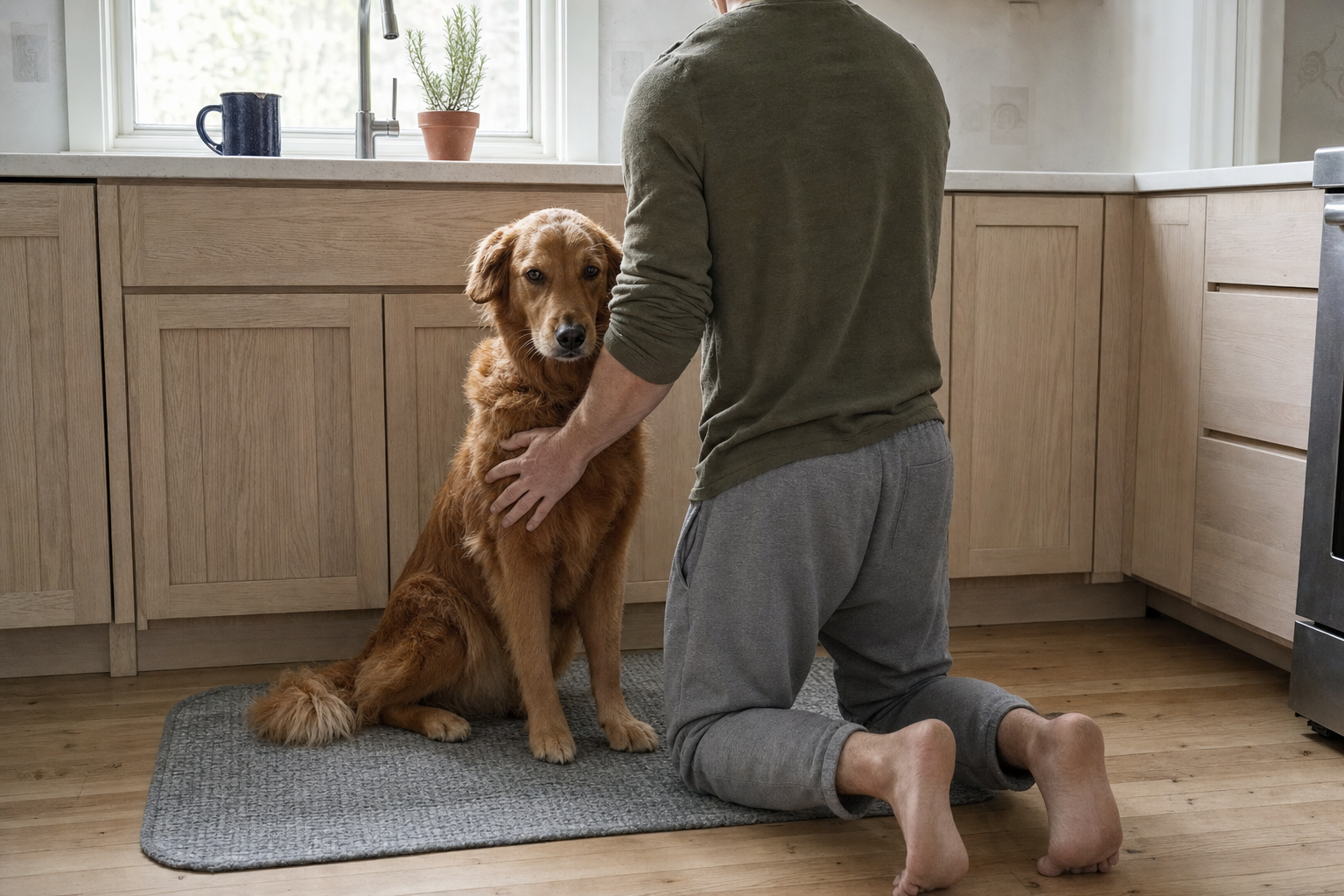
What Happens When Your Dog’s Nail Quick Gets Too Long?
If your dog’s nail quick has grown long, a groomer may be able to take off less length than you’d hope in one visit. The quick is living tissue, not an extra piece of nail to cut away. A safe plan begins with the dog's comfort and the nail as it is today, not the length you’d like it to be.
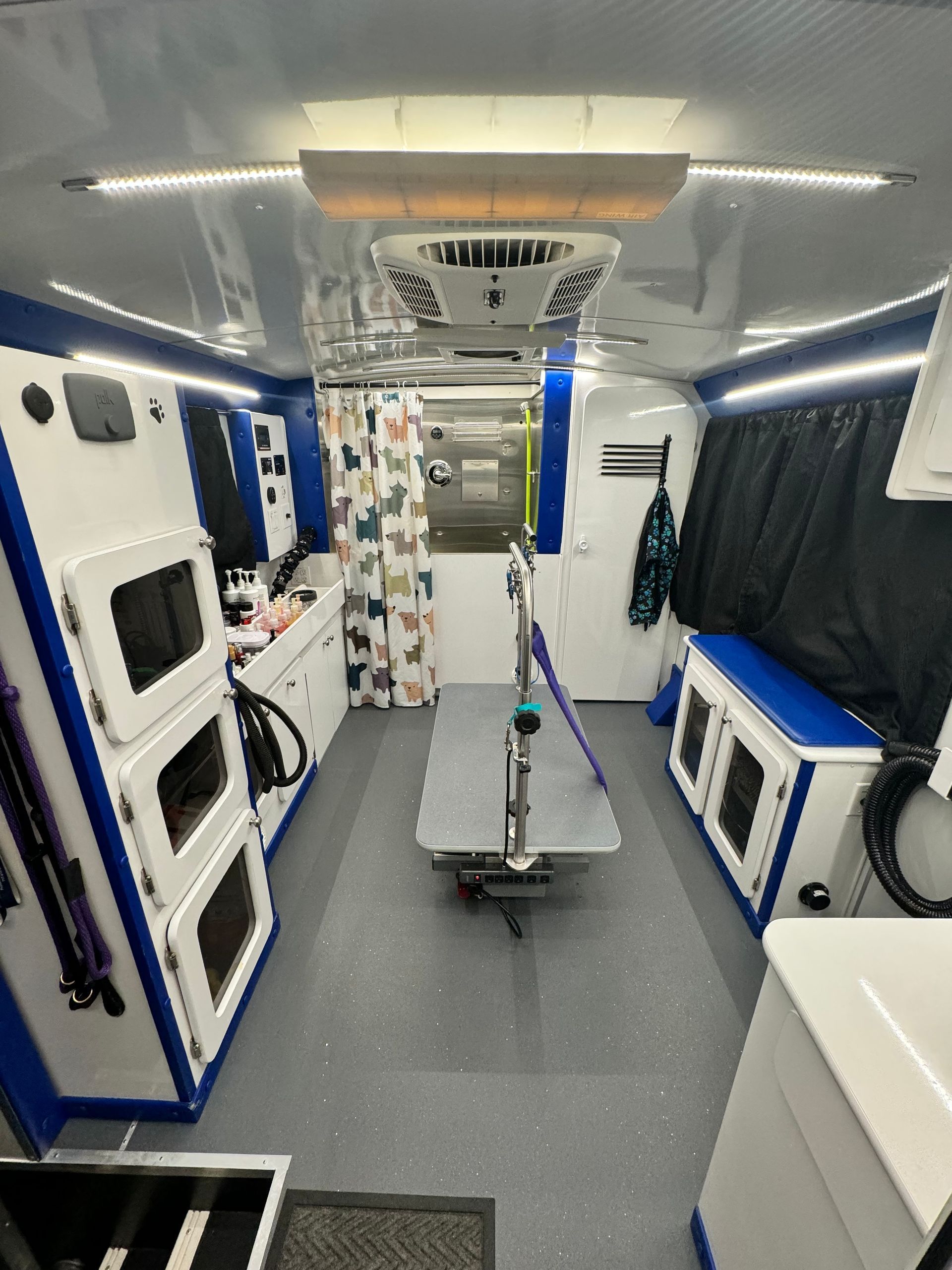
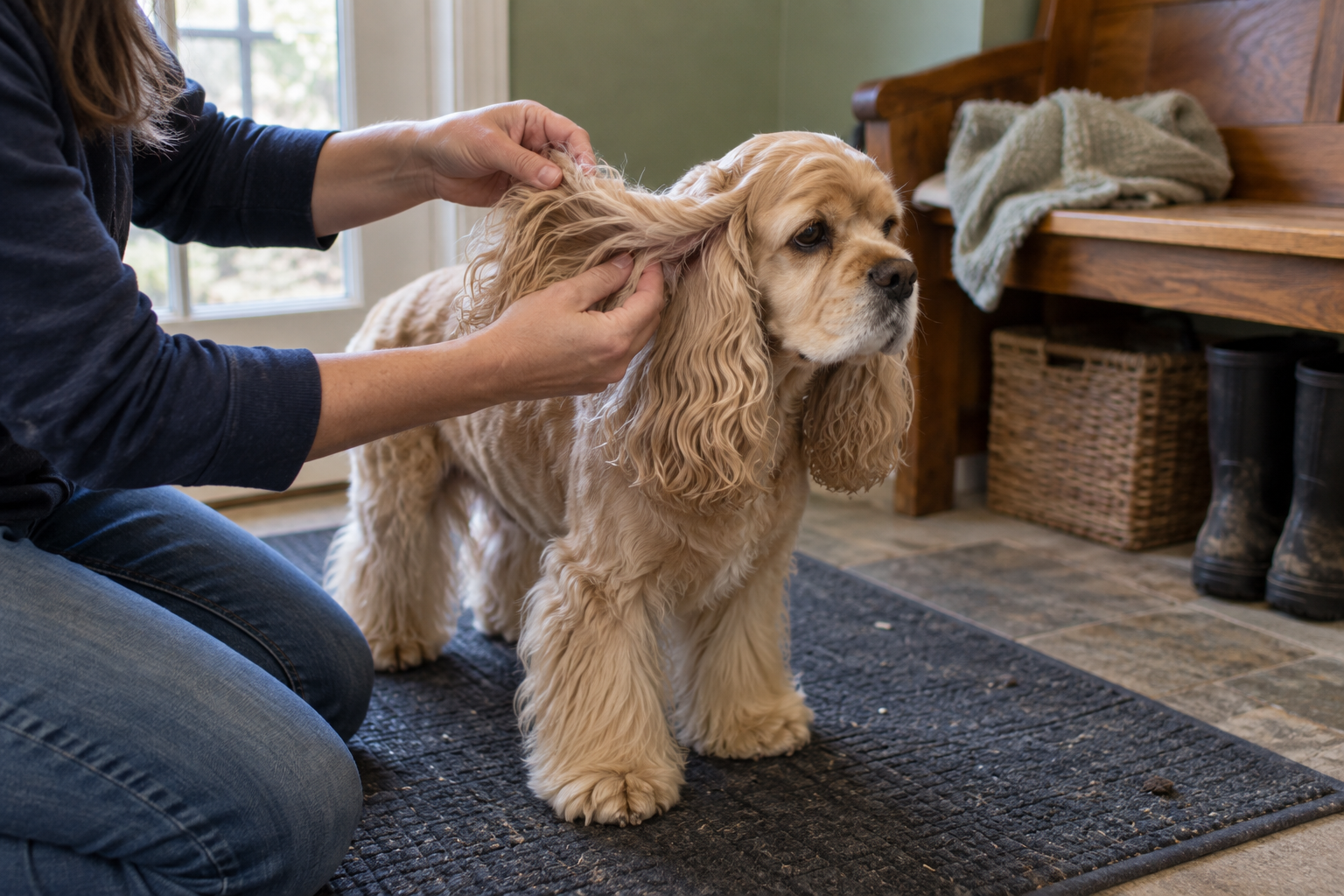
For routine care, Happy Hounds Mobile Pet Grooming Full Groom Package gives you a chance to talk about nails alongside the rest of the groom. Tell the groomer if the nails have become long, if a past trim upset your dog or if your dog now avoids having their feet touched.
What the quick is
VCA Animal Hospitals’ nail-trimming guidance explains that the quick contains blood vessels and nerves. Cutting into it can hurt and bleed. In a light-colored nail it may be visible, while a dark nail can make it harder to identify from the outside. VCA also notes that in dogs who haven’t had regular trims, the quick can grow out almost to the end of the nail.
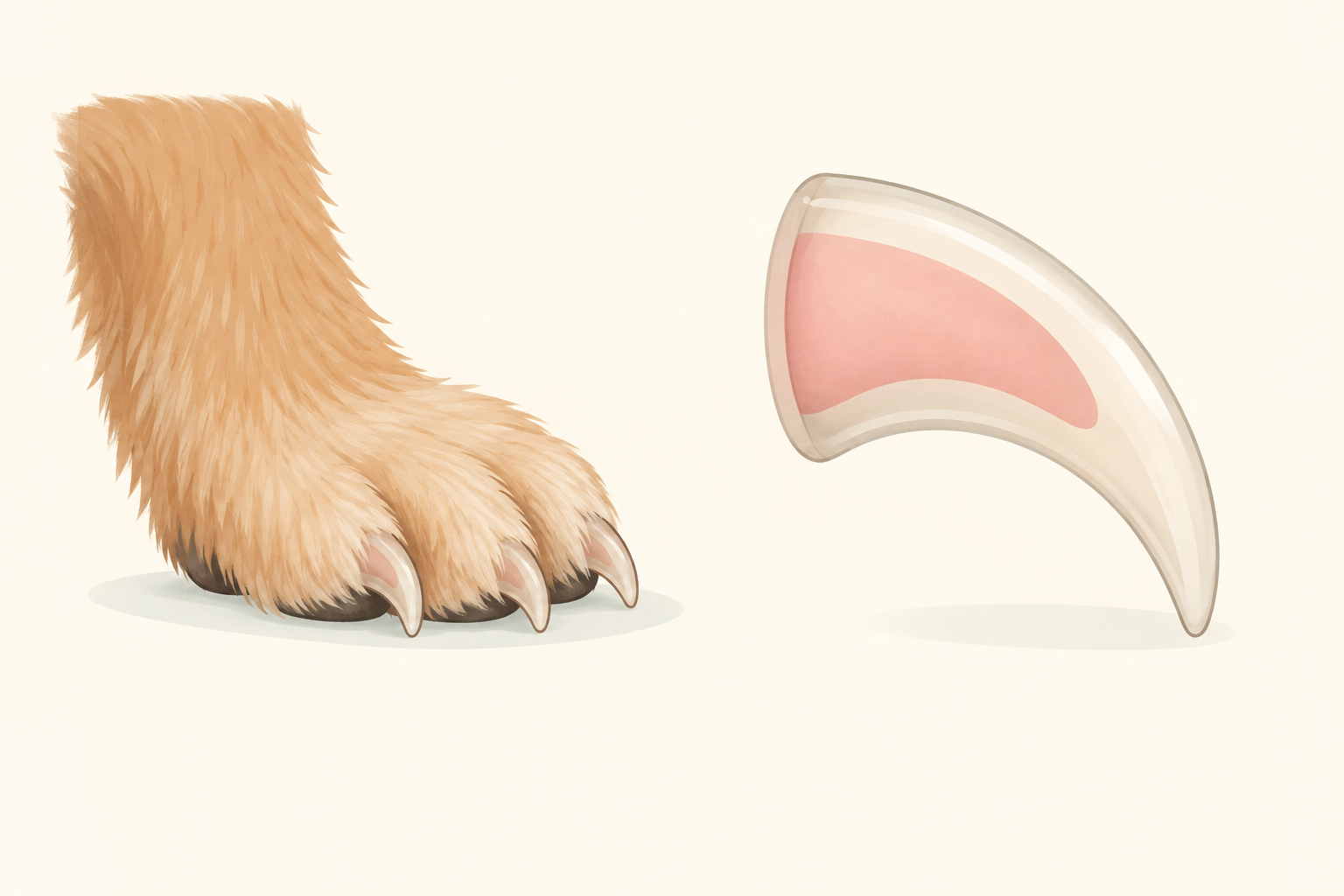
That’s why a photo from the internet can’t tell you where to cut on your dog. Nail shape, color and the quick's position vary. A drawn diagram can explain the parts, but it cannot establish where a tool should go on a living animal.
If you are unsure, ask a groomer or veterinary professional to assess the nails. There’s no need to make a test cut to find out how long the quick is. Not knowing is a perfectly good reason to ask for help.
Why a trim may look smaller than expected
It’s natural to hope a long nail can be shortened to a neat length straight away. The person doing the trim has to work within the nail's current limits and the dog's tolerance. A small amount removed can still reflect a careful appointment.
Ask what the groomer could safely accomplish and which nails need another discussion. Do not measure success by comparing the dog with a picture of very short nails. The useful question is whether the work was good for this dog's nail structure and comfort.
Avoid any plan that promises the quick will move back by a fixed date. Every dog is different, and a veterinarian is the right person to ask about nail health or unusual growth.
Long nails vs a medical problem
A dog with long but comfortable nails is a different case from a dog with a torn nail, active bleeding, swelling or trouble putting weight on a paw. If you see an injury or apparent pain, contact the veterinarian instead of booking a routine groom as the first step.
For a damaged nail, VCA's broken-nail guidance describes the sensitivity of exposed living tissue and the need for appropriate care. Don’t try to pull off a damaged section or cut deep to tidy it up. Tell your vet what happened and follow their instructions.
If the concern is not an injury but handling has become difficult, describe that clearly. Your dog may need a slower approach, or a conversation with your vet about pain or anxiety. Forcing completion because every nail was trimmed at a previous appointment is not a useful goal.
Bring the history that changes the appointment
You do not need to know the anatomy in detail to give the groomer useful information. Explain what has changed, what your dog accepts and what has been attempted. A brief, honest history is better than saying “he is fine” because you hope the appointment will go smoothly.
A few things worth mentioning:
- When were the nails last professionally checked or trimmed?
- Has a nail been injured or bled recently?
- Does the dog react to one paw or to all foot handling?
- Has your veterinarian provided any relevant care instructions?
- Was clipping, grinding or another part of the previous visit difficult?
- How should the groomer contact you if the plan needs to change?
Please don’t keep testing how your dog reacts before the appointment. If touching a paw seems painful, stop and call your vet. You don’t need to cause discomfort to give a good briefing.
Comfort is part of the result
A nail appointment should consider how your dog is coping, not just how long the nails are. Ask how the groomer decides when to pause, and what happens if only part of the job can be done comfortably. It’s easier to agree on this before any tools come out.
A quieter mobile grooming setting can help a nervous dog, and Happy Hounds Mobile Pet Grooming offers one-on-one mobile grooming. Still, it doesn’t guarantee easy handling, so share your dog’s history rather than assuming the setting will solve everything.
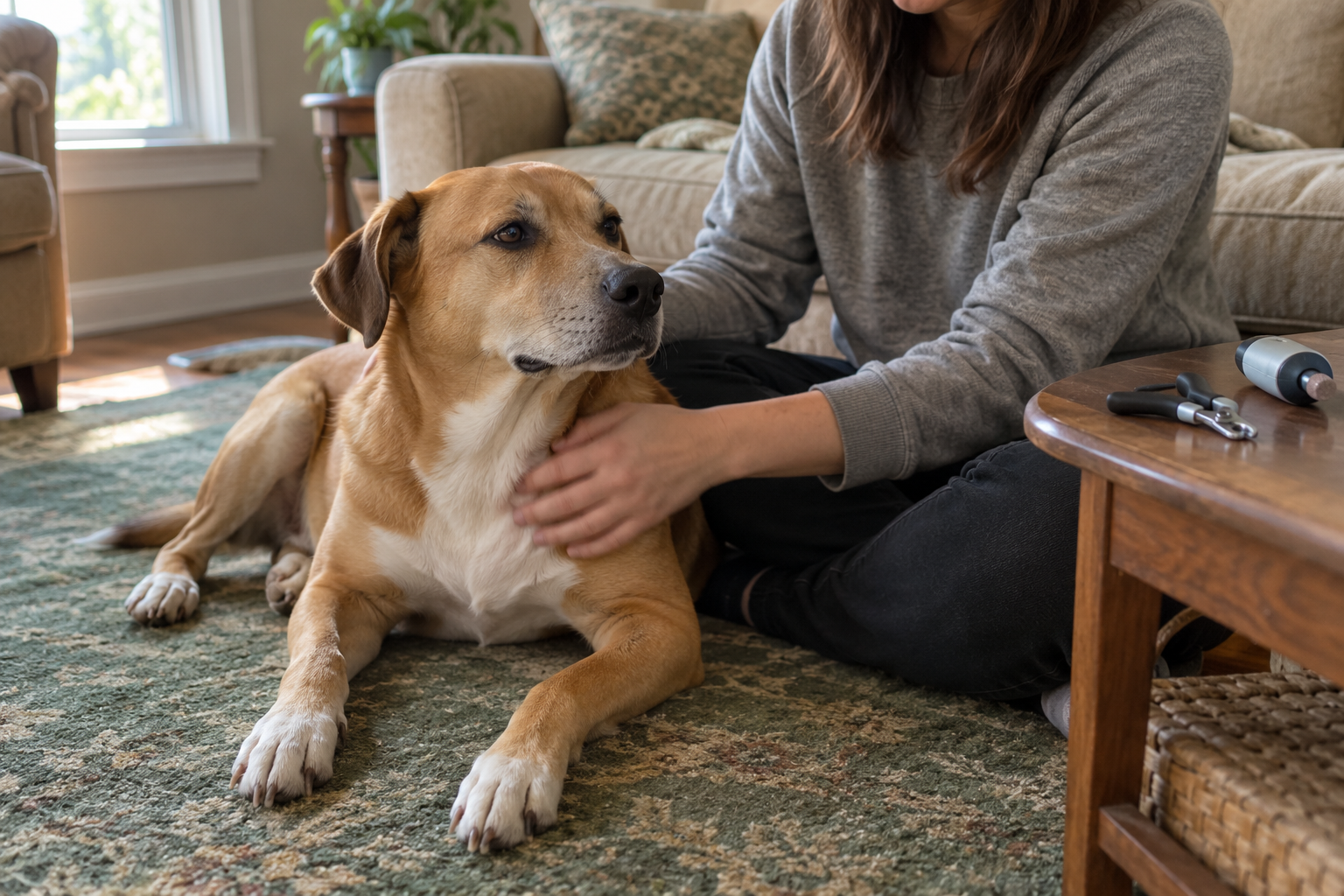
If it’s appropriate, ask the groomer about gentle paw handling you can practice at home, with no clippers involved. Learning what your dog accepts is a good first step, and a professional can guide you from there.
Leave with a clear next step
At the end of the visit, ask what was done, what remains and who should handle the next step. If the groomer recommends veterinary attention, clarify the concern and arrange it. If routine follow-up is appropriate, agree on how the timing will be reviewed for your dog.
Keep notes instead of trusting your memory. Writing down which paw was tricky or which approach went best saves the next person from starting over, and it makes new changes easier to spot.
For Carlisle and Cumberland County owners, a long quick is a reason to talk things through, not a reason to cut deeper. Ask for a comfortable nail-care plan. When arranging an appointment through Happy Hounds Mobile Pet Grooming, mention long nails and any previous difficulty with paw handling. Ask what can be assessed at the visit and whether a veterinary concern should be addressed first. Discuss your dog’s grooming needs.